Quotessence
Home / Quotes / Quote by Samuel Johnson

Quote by Samuel Johnson

“It is, however, not necessary, that a man should forbear to write, till he has discovered some truth unknown before; he may be sufficiently useful, by only diversifying the surface of knowledge, and luring the mind by a new appearance to a second view of those beauties which it had passed over inattentively before.”

Quote by Samuel Johnson

Work

Samuel Johnson: Selected Writings

Samuel Johnson: Selected Writings is a compilation that offers readers a comprehensive glimpse into the intellectual and literary achievements of one of the most influential figures in English literature. The volume includes a range of Johnson's writings, providing insight into his thoughts on language, literature, and society during his time. more

Author
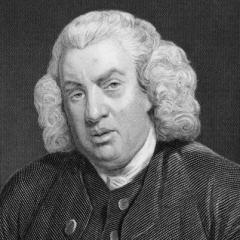
Samuel Johnson
Samuel Johnson

Samuel Johnson was an English writer, poet, and lexicographer, renowned for his comprehensive English dictionary, 'A Dictionary of the English Language', published in 1755. His distinctive writing style and wit have cemented his place as a significant figure in the history of English literature. more

You May Also Like

“To write is, indeed, no unpleasing employment, when one sentiment readily produces another, and both ideas and expressions present themselves at the first summons; but such happiness, the greatest genius does not always obtain; and common writers know it only to such a degree, as to credit its possibility. Composition is, for the most part, an effort of slow diligence and steady perseverance, to which the mind is dragged by necessity or resolution, and from which the attention is every moment starting to more delightful amusements.”

“Every man speaks and writes with intent to be understood; and it can seldom happen but he that understands himself, might convey his notions to another, if, content to be understood, he did not seek to be admired; but when once he begins to contrive how his sentiments may be received, not with most ease to his reader, but with most advantage to himself, he then transfers his consideration from words to sounds, from sentences to periods, and, as he grows more elegant, becomes less intelligible.”

“There are some works which the authors must consign unpublished to posterity, however uncertain be the event, however hopeless be the trust. He that writes the history of his own times, if he adhere steadily to truth, will write that which his own times will not easily endure. He must be content to reposite his book till all private passions shall cease, and love and hatred give way to curiosity.”

“Many leave the labours of half their life to their executors and to chance, because they will not send them abroad unfinished, and are unable to finish them, having prescribed to themselves such a degree of exactness as human diligence can scarcely ontain.”

“If an author be supposed to involve his thoughts in voluntary obscurity, and to obstruct, by unnecessary difficulties, a mind eager in the pursuit of truth; if he writes not to make others learned, but to boast the learning which he possesses himself, and wishes to be admired rather than understood, he counteracts the first end of writing, and justly suffers the utmost severity of censure, or the more afflicting severity of neglect.”

“Few of those who fill the world with books, have any pretensions to the hope either of pleasing or instructing. They have often no other task than to lay two books before them, out of which they compile a third, without any new material of their own, and with very little application of judgment to those which former authors have supplied.”

“Truth, like beauty, varies its fashions, and is best recommended by different dresses to different minds; and he that recalls the attention of mankind to any part of learning which time has left behind it, may be truly said to advance the literatures of his own age. As the manners of nations vary, new topicks of persuasion become necessary, and new combinations of imagery are produced; and he that can accommodate himself to the reigning taste, may always have readers who perhaps would not have looked upon better performances.”