Quotessence
Home / Quotes / Quote by Robert S. Siegler

Quote by Robert S. Siegler

“Children often have been likened to scientists. Both ask fundamental questions about the nature of the universe. Both also ask innumerable questions that seem utterly trivial to others. Finally, both are granted by society the time to pursue their musings.”

Quote by Robert S. Siegler

Work

Children's Thinking

This book delves into the various stages of children's cognitive growth, offering insights into how they perceive and understand the world around them. more

Author

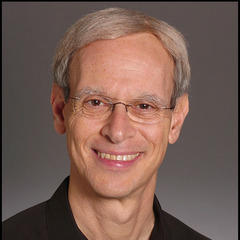
Robert S. Siegler
Robert S. Siegler

Robert S. Siegler is a renowned psychologist and educational researcher, born on May 12, 1949. His research focuses on children's cognitive development, mathematical learning, and reading comprehension. Professor Siegler's work has had a profound impact on the field of education. more

You May Also Like

“The computer revolution is a revolution in the way we think and in the way we express what we think. The essence of this change is the emergence of what might best be called procedural epistemology-the study of the structure of knowledge from an imperative point of view, as opposed to the more declarative point of view taken by classical mathematical subjects.”

“We have also obtained a glimpse of another crucial idea about languages and program design. This is the approach of statified design, the notion that a complex system should be structured as a sequence of levels that are described using a sequence of languages. Each level is constructed by combining parts that are regarded as primitive at that level, and the parts constructed at each level are used as primitives at the next level. The language used at each level of a stratified design has primitives, means of combination, and means of abstraction appropriate to that level of detail.”

“I can only think that the book is read because it deals with the difficulties of schooling, which do not change. Please note: the difficulties, not the problems. Problems are solved or disappear with the revolving times. Difficulities remain. It will always be difficult to teach well, to learn accurately; to read, write, and count readily and competently; to acquire a sense of history and start one's education or anothers.”