Quotessence
Home / Quotes / Quote by Friedrich August von Hayek

Quote by Friedrich August von Hayek

“If this is the degree of inflation planned for in advance, the real outcome is indeed likely to be such that most of those who will retire at the end of the century will be dependent on the charity of the younger generation. And ultimately not morals but the fact that the young supply the police and the army will decide the issue: concentration camps for the aged unable to maintain themselves are likely to be the fate of an old generation whose income is entirely dependent on coercing the young.”

Quote by Friedrich August von Hayek

Author
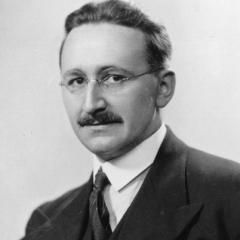
Friedrich August von Hayek

Friedrich August von Hayek, born on May 8, 1899, in Austria, and died on March 23, 1992, in the United Kingdom, was one of the most distinguished economists of the 20th century. He is renowned for his profound insights into the free market economy and his critical views on socialism. more

You May Also Like

“The task of the political philosopher can only be to influence public opinion, not to organize people for action. He will do so effectively only if he is not concerned with what is now politically possible but consistently defends the "general principles which are always the same." In this sense I doubt whether there can be such a thing as a conservative political philosophy. Conservatism may often be a useful practical maxim, but it does not give us any guiding principles which can influence long-range developments.”

“When we ask what ought to be the relative remunerations of a nurse or a butcher, or a coal miner and a judge at a high court, of the deep sea diver of the cleaner of sewers, of the organiser of a new industry and a jockey, of the inspector of taxes and the inventor of a life-saving drug, of the jet-pilot or the professor of mathematics, the appeal to 'social justice' does not give us the slightest help in deciding.”

“In the Small group the individual can know the effects of his actions on his several fellows, and the rules may effectively forbid him to harm them in any manner and even require him to assist them in specific ways. In the Great Society many of the effects of a person's actions on various fellows must be unknown to him. It can, therefore, not be the specific effects in the particular case, but only rules which define kinds of actions prohibited or required, which must serve as guides to the individual.”

“There is nothing in the basic principles of liberalism to make it a stationary creed; there are no hard-and-fast rules fixed once and for all. ... Probably nothing has done so much harm to the liberal cause as the wooden insistence of some liberals on certain rules of thumb, above all the principle of laissez faire.”

“Conservatism, though a necessary element in any stable society, is not a social program; in its paternalistic, nationalistic and power adoring tendencies it is often closer to socialism than true liberalism; and with its traditionalistic, anti-intellectual, and often mystical propensities it will never, except in short periods of disillusionment, appeal to the young and all those others who believe that some changes are desirable if this world is to become a better place.”

“In abbreviated form, by a kind of symbol, only the most essential information is passed on and passed on only to those concerned. It is more than a metaphor to describe the price system as a kind of machinery for registering change, or a system of telecommunications which enables individual producers to watch merely the movement of a few pointers, as an engineer might watch the hands of a few dials, in order to adjust their activities to changes of which they may never know more than is reflected in the price movement.”