“The dissemination of the individual's opinions on matters of public interest is for us, in the historic words of the Declaration of Independence, an 'unalienable right' that 'governments are instituted among men to secure.' History shows us that the Founders were not always convinced that unlimited discussion of public issues would be 'for the benefit of all of us' but that they firmly adhered to the proposition that the 'true liberty of the press' permitted 'every man to publish his opinion'.”
Quote by John Marshall Harlan II
Author
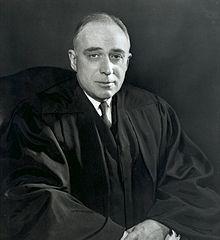
John Marshall Harlan II
John Marshall Harlan II was a former Associate Justice of the Supreme Court of the United States. Born on May 20, 1899, and passing away on December 29, 1971, he is known for his influential stance on civil rights cases, notably his dissenting opinion in Brown v. Board of Education, which supported the desegregation of public schools. more
You May Also Like
Source: The Conduct of Inquiry: Methodology for Behavioural Science
Source: The Origin of Consciousness in the Breakdown of the Bicameral Mind
“We can only know in the nervous system what we have known in behavior first.”
Source: The Origin of Consciousness in the Breakdown of the Bicameral Mind
Source: The Origin of Consciousness in the Breakdown of the Bicameral Mind
“Indeed, it is sometimes almost as if the problem had to be forgotten to be solved.”
Source: The Origin of Consciousness in the Breakdown of the Bicameral Mind
“It is by metaphor that language grows.”
Source: The Origin of Consciousness in the Breakdown of the Bicameral Mind
Source: The Origin of Consciousness in the Breakdown of the Bicameral Mind
Source: The Origin of Consciousness in the Breakdown of the Bicameral Mind
Source: The Origin of Consciousness in the Breakdown of the Bicameral Mind