Quotessence
Home / Quotes / Quote by Hermann Kolbe

Quote by Hermann Kolbe

“The weeds of a seemingly learned and brilliant but actually trivial and empty philosophy of Nature which, after having been replaced some 50 years ago by the exact sciences, is now once more dug up by pseudo scientists from the lumber room of human fallacies, and like a trollop, newly attired in elegant dress and make-up, is smuggled into respectable company, to which she does not belong.”

Quote by Hermann Kolbe

Author
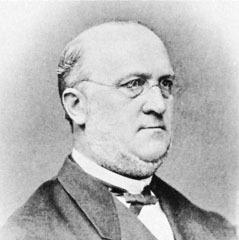
Hermann Kolbe
Hermann Kolbe

Hermann Kolbe, born on September 27, 1818, and died on November 25, 1884, was a prominent German chemist known for his significant contributions to the field of organic chemistry. He is best remembered for his work on organic synthesis and the Kolbe reaction, which has had a lasting impact on the development of organic chemistry. more

You May Also Like

“There is a reward structure in science that is very interesting: Our highest honors go to those who disprove the findings of the most revered among us. So Einstein is revered not just because he made so many fundamental contributions to science, but because he found an imperfection in the fundamental contribution of Isaac Newton.”

“There is an astonishing imagination, even in the science of mathematics. ... We repeat, there was far more imagination in the head of Archimedes than in that of Homer.”

“There is nothing which Nature so clearly reveals, and upon which science so strongly insists, as the universal reign of law, absolute, universal, invariable law... Not one jot or tittle of the laws of Nature are unfulfilled. I do not believe it is possible to state this fact too strongly... Everything happens according to law, and, since law is the expression of Divine will, everything happens according to Divine will, i.e. is in some sense ordained, decreed.”

“There prevails among men of letters, an opinion, that all appearance of science is particularly hateful to Women; and that therefore whoever desires to be well received in female assemblies, must qualify himself by a total rejection of all that is serious, rational, or important; must consider argument or criticism as perpetually interdicted; and devote all his attention to trifles, and all his eloquence to compliment.”

“Though the parallel is not complete, it is safe to say that science will never touch them unaided by its practical applications. Its wonders may be catalogued for purposes of education, they may be illustrated by arresting experiments, by numbers and magnitudes which startle or fatigue the imagination but they will form no familiar portion of the intellectual furniture of ordinary men unless they be connected, however remotely, with the conduct of ordinary life.”

“Through it [Science] we believe that man will be saved from misery and degradation, not merely acquiring new material powers, but learning to use and to guide his life with understanding. Through Science he will be freed from the fetters of superstition; through faith in Science he will acquire a new and enduring delight in the exercise of his capacities; he will gain a zest and interest in life such as the present phase of culture fails to supply.”