“Mr. Pickwick took a seat and the paper, but instead of reading the latter, peeped over the top of it, and took a survey of the man of business, who was an elderly, pimply-faced, vegetable-diet sort of man, in a black coat, dark mixture trousers, and small black gaiters; a kind of being who seemed to be an essential part of the desk at which he was writing, and to have as much thought or sentiment.”
Quote by Charles Dickens
Work
The posthumous papers of the Pickwick Club
This book is a compilation of the original serialized installments of Charles Dickens' popular novel, chronicling the escapades and misadventures of a group of friends who form the Pickwick Club. The narrative is known for its humorous and satirical portrayal of 19th-century English society. more
Author
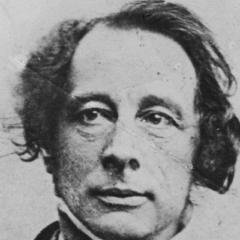
Charles Dickens
Charles Dickens, a British writer born on February 7, 1812, and died on June 9, 1870, is one of the greatest novelists of the 19th century. Known for his profound social criticism and vivid narrative style, Dickens' works extensively cover social reality, revealing various issues in the British society of the time. more
You May Also Like
Source: The Life and Adventures of Martin Chuzzlewit
Source: The Life And Adventures Of Nicholas Nickleby
Source: The Mystery of Edwin Drood and Other Pieces
Source: Nicholas Nickleby: Easyread Comfort Edition
Source: The Life and Adventures of Nicholas Nickleby ... With a Frontispiece from a Painting by T. Webster
Source: Delphi Complete Works of Charles Dickens (Illustrated)
“The cramped monotony of my existence grinds me away by the grain.”
Source: The Mystery of Edwin Drood
Source: Four Novels: Great Expectations, David Copperfield, A Tale of Two Cities, and Hard Times
Source: Delphi Complete Works of Charles Dickens (Illustrated)
Source: The Life and Adventures of Nicholas Nickleby ... With a Frontispiece from a Painting by T. Webster