Quotessence
Home / Quotes / Quote by Jason Blum

Quote by Jason Blum

“The model we established was to give creative people complete creative freedom in exchange for betting on themselves, so they work for the minimums you're allowed to work for, and if the movies work in a big way, everyone does very well. If the movies don't, nobody loses too much money. The benefit to doing all the movies low budget is we can tell different types of stories and take creative risks. The Purge would have been irresponsible to do for $20M, but to do it for $3M makes sense.”

Quote by Jason Blum

Author
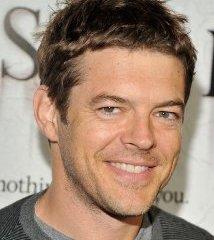
Jason Blum
Jason Blum

Jason Blum is a renowned film producer, born on February 20, 1969. He is known for his success in the horror and thriller genres, particularly through his production company Blumhouse Productions, which has produced a series of widely acclaimed films, including the 'Saw' franchise and 'Get Out'. more

You May Also Like

“For me it's much more like a little kid rebelling. The minute I was told what to do at any age, I did the opposite. Hopefully I'll do that for the rest of my life. I come from the business side and Mark comes from the creative side, but every time a decision came up about Creep it was two emails, and we agreed. I've not had that ever with someone on the creative or the business side.”

“I got into architecture because I was searching for a way to produce in the world. I went to art school and thought I would do it through art, but I realized very quickly that I was interested in the social ramifications of form making. So buildings became the vehicle and fulfilled that thing. That satisfied me when I produced them. I decided this is what I wanted to do with the rest of my life.”

“What I resist is techniques. I find techniques very problematic. So when critics talk about my work in those terms, I find that they miss the condition. I am comfortable with the notion of pattern and ornament as a system of organization, [but] for me it acts as a textile. So it's not about pattern, but the notion of architecture through the lens of textile, rather than architecture through the lens of brick and mortar.”