Quotessence
Home / Quotes / Quote by Blaise Cendrars

Quote by Blaise Cendrars

“তখন আমি বেশ তরুণ ছিলুম আমি সবে ষোলো বছরের হবো হয়তো কিন্তু ছেলেবেলার স্মৃতি মুছে গিয়েছিল যেখানে জন্মেছিলুম সেখান থেকে ৪৮,০০০ মাইল দূরে আমি ছিলুম মসকোতে, তিনঘণ্টির হাজার মিনার আর সাতটা রেলস্টেশান আর ওই হাজার আর তিন মিনার আর সাতটা রেলস্টেশান আমার জন্যে যথেষ্ট ছিল না কারণ আমি ছিলুম গরমমেজাজ আর পাগল তরুণ আমার হৃদয় ইফিসিয়াসের মন্দির কিংবা মসকোর রেড স্কোয়ারের মতন ছিল তপ্ত সূর্যাস্তের সময়ে আর আমার দুই চোখ ওই পুরোনো রাস্তা-ধরে চলার সময়ে জ্বলজ্বল করতো আর আমি আগেই এমন খারাপ কবি ছিলুম যে আমি জানতুম না তা কেমন করে নিজের সঙ্গে বয়ে নিয়ে যাই”

Quote by Blaise Cendrars

Author
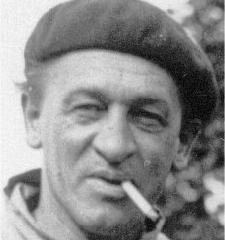
Blaise Cendrars
Blaise Cendrars

Blaise Cendrars, a French novelist, poet, journalist, was born on September 1, 1887, and died on January 21, 1961. His works are characterized by a unique literary style that blends realism with surrealism, having a profound impact on 20th-century literature. more

You May Also Like

“You are wise enough to understand that being “a little lonely” is not a bad thing. A writer’s occupation is one of the loneliest in the world, even if the loneliness is only an inner solitude and isolation, for that he must have at times if he is to be truly creative. And so I believe only the person who knows and is not afraid of loneliness should aspire to be a writer. But there are also rewards that are rich and peculiarly satisfying.”

“I become like a boulder on the beach in a time-lapse video. The sun and moon and stars cross the sky again and again, shadows lengthen and shrink, the tide rushes in and out. The sea heaves in the background, crabs and seabirds flicker in and out of view. Meanwhile, the boulder sits there, stolid, unmoving, all alone, as life whizzes past.”

“At the beginning of the twenty-first century, to feel alone or want to be alone is deeply unfashionable: to admit to feeling alone is to reject and betray others, as if they are not good company, and do not have entertaining, interesting lives of their own to distract us, and to actually seek to be alone is a radical act; to want to be alone is to refuse a certain kind of conversational hospitality and to turn to another door, and another kind of welcome, not necessarily defined by human vocabulary.”

“Oh!" cried Anne eagerly, "I hope I do justice to all that is felt by you, and by those who resemble you. God forbid that I should undervalue the warm and faithful feelings of any of my fellow-creatures! I should deserve utter contempt if I dared to suppose that true attachment and constancy were known only by woman. No, I believe you capable of everything great and good in your married lives. I believe you equal to every important exertion, and to every domestic forbearance, so long as--if I may be allowed the expression--so long as you have an object. I mean while the woman you love lives, and lives for you. All the privilege I claim for my own sex (it is not a very enviable one; you need not covet it), is that of loving longest, when existence or when hope is gone.”