“The measures adopted to restore public order are: First of all, the elimination of the so-called subversive elements. ... They were elements of disorder and subversion. On the morrow of each conflict I gave the categorical order to confiscate the largest possible number of weapons of every sort and kind. This confiscation, which continues with the utmost energy, has given satisfactory results.”
Quote by Benito Mussolini
Author
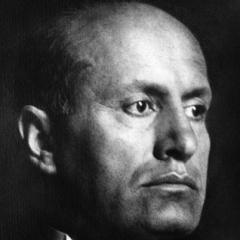
Benito Mussolini
Benito Mussolini, born on July 29, 1883, and died on April 28, 1945, was the founder of Italian fascism and served as the Prime Minister of Italy from 1919 to 1945. During his rule, he implemented fascist policies both domestically and internationally, leading to the expansion of Italian territory and the outbreak of World War II. more
You May Also Like
“I ask you sir, who are the militia? They consist now of the whole people.”
“The lion and the calf shall lie down together but the calf won't get much sleep.”
Source: A Familiar Exposition of the Constitution of the United States: Containing a Brief Commentary on Every Clause, Explaining the True Nature, Reasons, and Objects Thereof : Designed for the Use of School Libraries and General Readers : with an Appendix, Containing Important Public Documents, Illustrative of the Constitution
“Jesus was lost in his love for God.”
Source: 'Another city'. a selectionf of poems from the Persian