“To look for a continuation in harmony between a number of independent unconnected sovereignties, situated in the same neighborhood, would be to disregard the uniform course of human events, and to set at defiance the accumulated experience of ages.”
Quote by Alexander Hamilton
Work
The Federalist, on the New Constitution, Written in the Year 1788
Composed by Alexander Hamilton, James Madison, and John Jay, this collection of essays advocates for the ratification of the U.S. Constitution, offering insights into the structure and function of the federal government. more
Author
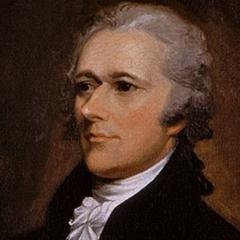
Alexander Hamilton
Alexander Hamilton was a Founding Father of the United States, born on January 11, 1757, and died on July 12, 1804. He played a crucial role in the American Revolutionary War and was instrumental in the drafting of the U.S. Constitution. As the first Secretary of the Treasury, Hamilton promoted fiscal stability and economic growth, establishing the First Bank of the United States and proposing solutions for federal debt. His ideas and policies had a profound impact on the early political and economic development of the United States. more
You May Also Like
Source: America's Founding Documents: The Declaration of Independence, the Articles of Confederation, the United States Constitution, the Federalist Papers, and the Bill of Rights
Source: The Federalist Papers: A Collection of Essays Written in Favour of the New Constitution
Source: The Fœderalist: A Collection of Essays, Written in Favor of the New Constitution, as Agreed Upon by the Fœderal Convention, September 17, 1787. Reprinted from the Original Text. With an Historical Introduction and Notes
Source: The Federalist Papers: A Collection of Essays Written in Favour of the New Constitution
Source: The federalist papers
Source: The Federalist, on the New Constitution, Written in 1788
Source: The Fœderalist: A Collection of Essays, Written in Favor of the New Constitution, as Agreed Upon by the Fœderal Convention, September 17, 1787. Reprinted from the Original Text. With an Historical Introduction and Notes
Source: The federalist papers