“As long as the reason of man continues fallible, and he is at liberty to exercise it, different opinions will be formed. As long as the connection subsists between his reason and his self-love, his opinions and passions will have a reciprocal influence on each other, and the former will be objects to which the latter attach themselves.”
Quote by James Madison
Work
The Fœderalist: A Collection of Essays, Written in Favor of the New Constitution, as Agreed Upon by the Fœderal Convention, September 17, 1787. Reprinted from the Original Text. With an Historical Introduction and Notes
This book is a collection of essays that were published in 1788 to support the newly adopted United States Constitution. The essays were written by Alexander Hamilton, James Madison, and John Jay. This reprinted edition includes an historical introduction and additional notes to provide context and explanation. more
Author
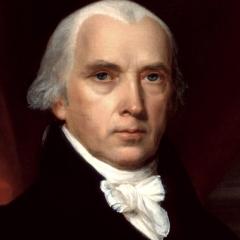
James Madison
James Madison, the 4th President of the United States, was born on March 16, 1751, and died on June 28, 1836. He was a key figure in drafting the U.S. Constitution and had a profound impact on the political system of the United States. more
You May Also Like
Source: The federalist papers
Source: The federalist papers
Source: The Federalist, on the New Constitution ... by A. Hamilton, James Madison, and John Jay. With an Appendix Containing the Letters of Pacificus (A. Hamilton) and Helvidius (J. Madison), on the Proclamation of Neutrality of 1793; the Original Articles of Confederation ... Sixth Edition, Etc
Source: The Federalist on the New Constitution, Written in the Year 1788, with an Appendix Containing the Letters of Pacificus and Helvidius on the Proclamation of Neutrality of 1793
Source: The Fœderalist: A Collection of Essays, Written in Favor of the New Constitution, as Agreed Upon by the Fœderal Convention, September 17, 1787. Reprinted from the Original Text. With an Historical Introduction and Notes
Source: The Federalist Papers: A Collection of Essays Written in Favour of the New Constitution
Source: America's Founding Documents: The Declaration of Independence, the Articles of Confederation, the United States Constitution, the Federalist Papers, and the Bill of Rights