Quotessence
Home / Quotes / Quote by Fanny Burney

Quote by Fanny Burney

“You have sensible women here [in England] but then, they are very devils--censorious, uncharitable, sarcastic--the women in Scotland have twice--thrice their freedom, with all their virtue--and are very conversable and agreeable--their educations are more finished.”

Quote by Fanny Burney

Author
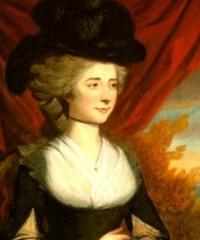
Fanny Burney
Fanny Burney

Fanny Burney was an influential English novelist and playwright of the 18th century, known for her wit and detailed observations. Born on June 13, 1752, she was the daughter of Dr. Charles Burney, a musician and musicologist. She received an extensive education at home, which included music, literature, and languages. Her first novel, 'Evelina', was published in 1778 and was followed by several other successful works, including 'Cecilia' and 'Camilla'. She also wrote plays and was a prolific letter writer, providing valuable insights into the social and cultural context of her time. more

You May Also Like

“I have this very moment finished reading a novel called The Vicar of Wakefield [by Oliver Goldsmith].... It appears to me, to be impossible any person could read this book through with a dry eye and yet, I don't much like it.... There is but very little story, the plot is thin, the incidents very rare, the sentiments uncommon, the vicar is contented, humble, pious, virtuous--but upon the whole the book has not at all satisfied my expectations.”

“When young people are too rigidly sequestered from [the world], their lively and romantic imaginations paint it to them as a paradise of which they have been beguiled; but when they are shown it properly, and in due time, they see it such as it really is, equally shared by pain and pleasure, hope and disappointment.”

“This perpetual round of constrained civilities to persons quite indifferent to us, is the most provoking and tiresome thing in theworld, but it is unavoidable in a country town, where everybody is known.... 'Tis a most shocking and unworthy way of spending our precious irrecoverable time, to those who know not its value.”

“I love and honour [Paulus Aemilius, in Plutarch's Lives], for his fondness for his children, which instead of blushing at, he avows and glories in: and that at an age, when almost all the heros and great men thought that to make their children and family a secondary concern, was the first proof of their superiority and greatness of soul.”

“I never pretend to be so superior a being as to be above having and indulging a hobby horse [her journal writing], and while I keep mine within due bounds and limits, nobody, I flatter myself, would wish to deprive me of the poor animal: to be sure, he is not formed for labour, and is rather lame and weak, but then the dear creature is faithful, constant, and loving, and though he sometimes prances, would not kick anyone into the mire, or hurt a single soul for the world--and I would not part with him for one who could win the greatest prize that ever was won at any races.”

“How truly does this journal contain my real and undisguised thoughts--I always write it according to the humour I am in, and if astranger was to think it worth reading, how capricious--insolent & whimsical I must appear!--one moment flighty and half mad,--the next sad and melancholy. No matter! Its truth and simplicity are its sole recommendations.”

“There's no nation under the sun can beat the English for ill-politeness: for my part, I hate the very sight of them; and so I shall only just visit a person of quality or two of my particular acquaintance, and then I shall go back again to France.”