Quotessence
Home / Quotes / Quote by George Steiner

Quote by George Steiner

Work

In Bluebeard's Castle: Some Notes Towards the Redefinition of Culture

This book delves into the complexities of cultural interpretation and evolution, using the iconic tale of Bluebeard as a metaphorical framework. It examines the interplay between tradition and innovation, and the ways in which cultural narratives shape individual and collective identities. more

Author
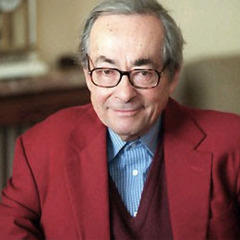
George Steiner
George Steiner

George Steiner is an esteemed literary critic, born on April 23, 1929. His work spans a wide range of literary fields, including novels, poetry, drama, and philosophy. more

You May Also Like

“The notion of travelling to far places in order to study alien peoples and cultures, is unique to Western man; it springs from the predatory genius of the Greeks; no primitive peoples have ever come to study us. This is, on the one hand, a disinterested, intellectually inspired impulse. It is one of our glories. But it is, on the other, part and parcel of exploitation. [] The Western obsession with inquiry, with analysis, with the classification of all living forms, is itself a mode of subjugation, of psychological and technical mastery.”

“He is no true reader who has not experienced the reproachful fascination of the great shelves of unread books, of the libraries at night of which Borges is the fabulist. He is no reader who has not heard, in his inward ear, the call of the hundreds of thousands, of the millions of volumes which stand in the stacks of the British Library asking to be read. For there is in each book a gamble against oblivion, a wager against silence, which can be won only when the book is opened again (but in contrast to man, the book can wait centuries for the hazard of resurrection.)”

“In a culture in which interpersonal relationships are generally considered to provide the answer to every form of distress, it is sometimes difficult to persuade well-meaning helpers that solitude can be as therapeutic as emotional support.”

“The ecstatic state of wholeness is bound to be transient because it has no part in the total pattern of ‘adaptation through maladaptation’ which is characteristic of our species…the hunger of imagination, the desire and pursuit of the whole, take origin from the realization that something is missing, from awareness of incompleteness.”