Quotessence
Home / Quotes / Quote by William James

Quote by William James

Work

Pragmatism

Pragmatism is a philosophical treatise that delves into the core tenets of pragmatism, a philosophical approach that prioritizes the practical outcomes of actions and beliefs. The book examines how experience and the consequences of actions are central to the formation of knowledge and understanding, challenging traditional metaphysical and epistemological frameworks. more
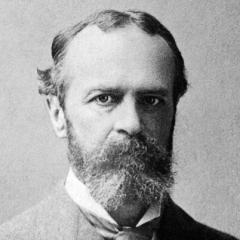
Author

William James
William James

William James, born on January 11, 1842, and died on August 26, 1910, was an influential American philosopher, psychologist, and writer. He is considered one of the founders of functionalism in psychology and has had a profound impact on the fields of psychology, philosophy, and religion. more

You May Also Like

“Essential truth, the truth of the intellectualists, the truth with no one thinking it, is like the coat that fits tho no one has ever tried it on, like the music that no ear has listened to. It is less real, not more real, than the verified article; and to attribute a superior degree of glory to it seems little more than a piece of perverse abstraction-worship.”

“If we remembered everything, we should on most occasions be as ill off as if we remembered nothing. It would take us as long to recall a space of time as it took the original time to elapse, and we should never get ahead with our thinking. All recollected times undergo, accordingly, what M. Ribot calls foreshortening; and this foreshortening is due to the omission of an enormous number of facts which filled them.”

“That reality is 'independent' means that there is something in every experience that escapes our arbitrary control. If it be a sensible experience it coerces our attention; if a sequence, we cannot invert it; if we compare two terms we can come to only one result. There is a push, an urgency, within our very experience, against which we are on the whole powerless, and which drives us in a direction that is the destiny of our belief.”

“Old-fashioned determinism was what we may call hard determinism. It did not shrink from such words as fatality, bondage of the will, necessitation, and the like. Nowadays, we have a soft determinism which abhors harsh words, and, repudiating fatality, necessity, and even predetermination, says that its real name is freedom; for freedom is only necessity understood, and bondage to the highest is identical with true freedom.”

“In youth we may have an absolutely new experience, subjective or objective, every hour of the day. Apprehension is vivid, retentiveness strong, and our recollections of that time, like those in a time spent in rapid and interesting travel, are of something intricate, multitudinous, and long-drawn-out. But as each passing year converts some of this experience into automatic routine which we hardly note at all, the days and the weeks smooth themselves out in recollection to a contentless unit, and the years grow hollow and collapse.”