Quotessence
Home / Quotes / Quote by Poul Hartling

Quote by Poul Hartling

“We talk of regional conflicts, of economic and social crises, of political instability, of abuses of human rights, of racism, religious intolerance, inequalities between rich and poor, hunger, over-population, under-development and. I could go on and on. Each and every one of these impediments to humanity's pursuit of well-being are also among the root causes of refugee problems.”

Quote by Poul Hartling

Author
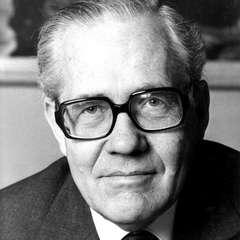
Poul Hartling
Poul Hartling

Poul Hartling was a prominent Danish politician, born on August 14, 1914, and passed away on April 30, 2000. He played a significant role in Danish politics, particularly in the fields of education, culture, and diplomacy. more

You May Also Like

“Joblessness is a weapon of mass destruction. Poverty is a weapon of mass destruction. Hunger is a weapon of mass destruction. Poor health care is a weapon of mass destruction. Poor education is a weapon of mass destruction. Discrimination is a weapon of mass destruction. Let us abolish such weapons of mass destruction here at home.”

“I hate racial discrimination most intensely and all its manifestations. I have fought all my life; I fight now, and will do so until the end of my days. Even although I now happen to be tried by one, whose opinion I hold in high esteem, I detest most violently the set-up that surrounds me here. It makes me feel that I am a Black man in a White man's court. This should not be I should feel perfectly at ease and at home with the assurance that I am being tried by a fellow South African, who does not regard me as an inferior, entitled to a special type of justice.”

“Affirmative action is the most important modern anti-discrimination technique ever instituted in the United States. It is the one tool that has had a demonstrable effect on discrimination. No one who knows anything about the subject would say it hasn't worked. It has certainly done something, or else it wouldn't have provoked so much opposition.”

“Our goal is to have a country that's not divided by race. And my impression, as I travel around the country, is that that's the kind of country that most people want, as well, and that we all have prejudice, we all have certain suspicions or stereotypes about people who are different from us, whether it's religious or racial or ethnic, but what I think I found in the American people, I think there's a core decency there, where if they take the time, if they get the time to know individuals, then they want to judge those individuals by their character.”

“I feel closer to my country than ever. There is no longer a feeling of lonesome isolation. Instead-peace. I return without fearing prejudice that once bothered me . . . for I know that people practice cruel bigotry in their ignorance, not maliciously”