Quotessence
Home / Quotes / Quote by Ernst Junger

Quote by Ernst Junger

“The (capital punishment) controversy passes the anarch by. For him, the linking of death and punishment is absurd. In this respect, he is closer to the wrongdoer than to the judge, for the high-ranking culprit who is condemned to death is not prepared to acknowledge his sentence as atonement; rather, he sees his guilt in his own inadequacy. Thus, he recognizes himself not as a moral but as a tragic person.”

Quote by Ernst Junger

Author
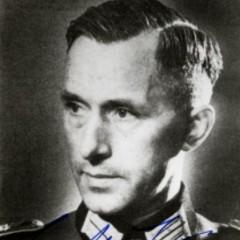
Ernst Junger
Ernst Junger

German writer born on March 29, 1895, and died on February 17, 1998. Ernst Junger is known for his war literature and philosophical works, with notable works including 'The Tin Drum' and 'The Story of War'. His writings deeply depict the impact of war on individuals and society. more

You May Also Like

“Teaching is a sacred art. This is why the noblest druid is not the one who conjures fires and smoke but the one who brings the news and passes on the histories. The teacher, the bard, the singer of tales is a freer of men's minds and bodies, especially when he roams without allegiance to one chieftain or another. But he is also a danger to the masters if he insists upon telling the truth. The truth will inevitably cause tremors in those who cling to power without honoring justice.”

“Time confined into blind caves or extended through tunnels, responds to the call of infinity, which teases with its promise of freedom. outside the body, time is a pair of compasses in the hands of eternity, but inside it is a pendulum, fastened to the heart. the heart takes its measure from the lengthening swing of the pendulum surveying what time is left. in its own rhythm time spreads itself wildly here and there and is crippled elsewhere. its unequally distributed weight wounds my body - that is how the particularities of my life are manifest.”

“If I wanted to order a ring for myself, the inscription I should choose would be: "Nothing passes away." I believe that nothing passes away without leaving a trace, and that every step we take, however small, has significance for our present and our future existence.”

“Living like that utterly convinced me of the extreme limitations of language. I was just a chlld then,so I have only an intuitive understanding of the degree to which one losses control of words once they are spoken or written. It was then that I first felt a deep curiosity about language, and understood it as a tool that encompasses both a single moment and eternity”

“Philosophy arises from an unusually obstinate attempt to arrive at real knowledge. What passes for knowledge in ordinary life suffers from three defects: it is cocksure, vague and self-contradictory. The first step towards philosophy consists in becoming aware of these defects, not in order to rest content with a lazy scepticism, but in order to substitute an amended kind of knowledge which shall be tentative, precise and self-consistent.”