Quotessence
Home / Quotes / Quote by Max Stirner

Quote by Max Stirner

“Moral spontaneity" corresponds entirely with "religious and orthodox philosophy", "constitutional monarchy", "the Christian state", "freedom with certain limits", or in a figure, to the hero fetters to a sick bed.”

Quote by Max Stirner

Work

The Ego and Its Own

This book delves into the concept of the ego, examining its significance in shaping individual identity and consciousness. It investigates the ego's relationship with the self and the external world, offering insights into the complexities of human psychology and self-awareness. more
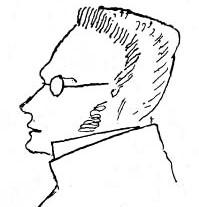
Author

Max Stirner
Max Stirner

Max Stirner was a German philosopher born on October 25, 1806, and died on June 26, 1856. His philosophical thoughts revolve around individualism and egoism, which had a profound impact on later existentialism and nihilism. more

You May Also Like

“We see here that Plato recognizes only one ultimate standard, the interest of the state. Everything that furthers it is good and virtuous and just; everything that threatens it is bad and wicked and unjust. Actions that serve it are moral; actions that endanger it, immoral. In other words, Plato’s moral code is strictly utilitarian; it is a code of collectivist or political utilitarianism. The criterion of morality is the interest of the state. Morality is nothing but political hygiene. This is the collectivist, the tribal, the totalitarian theory of morality: ‘Good is what is in the interest of my group; or my tribe; or my state.’ It is easy to see what this morality implied for international relations: that the state itself can never be wrong in any of its actions, as long as it is strong; that the state has the right, not only to do violence to its citizens, should that lead to an increase of strength, but also to attack other states, provided it does so without weakening itself. (This inference, the explicit recognition of the amorality of the state, and consequently the defence of moral nihilism in international relations, was drawn by Hegel.)”

“Too high for common selfishness, he could At times resign his own for others’ good, But not in pity, not because he ought, But in some strange perversity of thought, That swayed him onward with a secret pride To do what few or none would do beside; And this same impulse would, in tempting time, Mislead his spirit equally in crime; So much he soared beyond, or sunk beneath, The men with whom he felt condemned to breathe, And longed by good or ill to separate Himself from all who shared his mortal state.”

“Don't you understand? If that's the case, then - then everything is dicated by random chance! Somewhere, there's a universe where you - for whatever reason - you didn't come looking for me, and I - I slit my throat. And who's to say that this universe is somehow better than that one? How can we claim that we live in a moral universe, and that every other one is immoral?”

“She leaned back in her chair and raised her face to the sun, mildly intoxicated, not so much by the wine as by the scope of this important argument. Seduced, also, by the possibility that she might please herself, simply by wishing it so. As a devil's advocate, he was flawless. And yet, she knew, there was a flaw in his reasoning, just as there was a flaw in his ability to feel.”