“Another form of projection is the projection of one’s own problems on the children. First of all such projection takes place not infrequently in the wish for children. In such cases the wish for children is primarily determined by projecting one’s own problem of existence on that of the children. When a person feels that he has not been able to make sense of his own life, he tries to make sense of it in terms of the life of his children. But one is bound to fail within oneself and for the children. The former because the problem of existence can be solved by each one only for himself, and not by proxy; the latter because one lacks in the very qualities which one needs to guide the children in their own search for an answer. Children serve for projective purposes also when the question arises of dissolving an unhappy marriage. The stock argument of parents in such a situation is that they cannot separate in order not to deprive the children of the blessings of a unified home. Any detailed study would show, however, that the atmosphere of tension and unhappiness within the “unified family” is more harmful to the children than an open break would be-which teaches them at least that man is able to end an intolerable situation by a courageous decision.”
Quote by Erich Fromm
Work
This book explores the complexities of love, offering insights into its nature, dynamics, and importance in human life. It delves into the psychological and emotional aspects of love, providing readers with tools and strategies to cultivate healthy and fulfilling relationships. more
Author
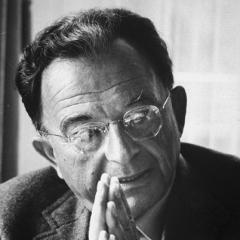
Erich Fromm, born on March 23, 1900 in Germany and died on March 18, 1980, was a renowned psychologist. His research covered a wide range of fields including anthropology, philosophy, and religion, particularly known for his studies on human psychology and interpersonal relationships. more
You May Also Like
“People who have no children can be hard: Attain a mail of ice and insolence:”
“Why can’t I go to summer camp, too? It’s not fair Willow gets to go have fun and I don’t.”
“[..] the rising star of the London medical scene had made a fatal, and public, mistake.”