Quotessence
Home / Quotes / Quote by Leon M. Lederman

Quote by Leon M. Lederman

“When I talk about the pain and hardship of a scientist's life, I'm speaking of more than existential angst. Galileo's work was condemned by the Church; Madame Curie paid with her life, a victim of leukemia wrought by radiation poisoning. Too many of us develop cataracts. None of us gets enough sleep. Most of what we know about the universe we know thanks to a lot of guys (and ladies) who stayed up late at night.”

Quote by Leon M. Lederman

Work

The God Particle: If the Universe is the Answer, what is the Question?

This book delves into the concept of the God Particle, a hypothetical elementary particle that may hold the key to understanding the fundamental forces and structure of the universe. It examines the scientific journey and the implications of this particle's discovery on our understanding of the cosmos. more

Author
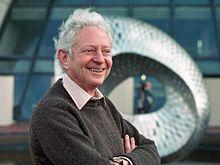
Leon M. Lederman
Leon M. Lederman

Leon M. Lederman is a renowned experimental physicist known for his research in particle physics. In 1956, he and Melvin Schwartz discovered the muon, for which they were jointly awarded the Nobel Prize in Physics in 1988. Lederman completed his undergraduate and graduate studies at the University of Chicago, where he began his scientific career. more

You May Also Like

“A scientist's life, the author says, is indeed conflictual, formed by battles, defeats, and victories: but the adversary is always and only the unknown, the problem to be solved, the mystery to be clarified. It is never a matter of civil war; even though of different opinions, or of different political leanings, scientists dispute each other, they compete, but they do not battle: they are bound together by a strong alliance, by the common faith "in the validity of Maxwell's or Boltzmann's equations," and by the common acceptance of Darwinism and the molecular structure of DNA.”

“Scientists are entitled to be proud of their accomplishments, and what accomplishments can they call 'theirs' except the things they have done or thought of first? People who criticize scientists for wanting to enjoy the satisfaction of intellectual ownership are confusing possessiveness with pride of possession. Meanness, secretiveness and, sharp practice are as much despised by scientists as by other decent people in the world of ordinary everyday affairs; nor, in my experience, is generosity less common among them, or less highly esteemed.”

“When you believe you have found an important scientific fact, and are feverishly curious to publish it, constrain yourself for days, weeks, years sometimes, fight yourself, try and ruin your own experiments, and only proclaim your discovery after having exhausted all contrary hypotheses. But when, after so many efforts you have at last arrived at a certainty, your joy is one of the greatest which can be felt by a human soul.”

“The scientist does not defy the universe. He accepts it. It is his dish to savor, his realm to explore; it is his adventure and never-ending delight. It is complaisant and elusive but never dull. It is wonderful both in the small and in the large. In short, its exploration is the highest occupation for a gentleman.”

“Great question in science - questions like the ones Herschel raised about the structure of the universe - are seldom answered by ivory-tower types engaging in pure thought. They are answered by people who are willing to get down into the trenches and grapple with nature. If that means casting your own telescope mirrors, as Herschel did, so be it.”

“Such is professional jealousy; a scientist will never show any kindness for a theory which he did not start himself. There is no feeling of brotherhood among these people. Indeed, they always resent it when I call them brother. To show how far their ungenerosity can carry them, I will state that I offered to let Prof. H--y publish my great theory as his own discovery; I even begged him to do it; I even proposed to print it myself as his theory. Instead of thanking me, he said that if I tried to fasten that theory on him he would sue me for slander.”