Quotessence
Home / Quotes / Quote by Fyodor Dostoevsky

Quote by Fyodor Dostoevsky

“Civilization merely develops man's capacity for a greater variety of sensations, and ... absolutely nothing else.”

Quote by Fyodor Dostoevsky

Author
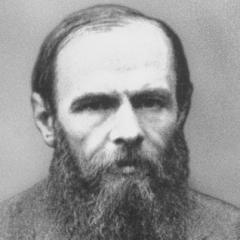
Fyodor Dostoevsky
Fyodor Dostoevsky

A renowned Russian novelist and a pioneer of psychological novels. His works deeply reveal the complexity of human nature and the injustice of society, having a profound impact on literature worldwide. more

You May Also Like

“For men to focus on controlling women's reproduction to solve a society's problems seems nothing short of mad or, at best, superstitious. But men's superstition or insanity has real and dire consequences for the women who are its object. And states, too, home in on women's bodies, perhaps to create the illusion that men are in control of uncontrollable forces. Indeed, almost all governments try to control women's bodies and regulate their appearance in some way.”

“Both life-planning and the adoption of lifestyle options become (in principle) integrated with bodily regimes. It would be quite short-sighted to see this phenomenon only in terms of changing ideals of bodily appearance (such as slimness or youthfulness), or as solely brought about by the commodifying influence of advertising. We become responsible for the design of our own bodies, and in a certain sense noted above are forced to do so the more post-traditional the social contexts in which we move.”

“Regimes are modes of self-discipline, but are not solely constituted by the orderings of convention in day-to-day life; they are personal habits, organised in some part according to social conventions, but also formed by personal inclinations and dispositions. Regimes are of central importance to self-identity precisely because they connect habits with aspects of the visible appearance of the body.”

“The body is an object in which we are all privileged, or doomed, to dwell, the source of feelings of well-being and pleasure, but also the site of illnesses and strains. (...) [I]t is an action-system, a mode of praxis, and its practical immersion in the interactions of day-to-day life is an essential part of the sustaining of a coherent sense of self-identity.”