“A narrow and distorted picture of America often emerges from the televised news. A single dramatic piece of the mosaic becomes, in the minds of millions, the entire picture.”
Quote by Spiro T. Agnew
Work
The Impudent Snobs: Agnew Vs. the Intellectual Establishment
This book delves into the public and private disputes between the political figure J. Edgar Hoover and the intellectual elite, exploring the dynamics of their interactions and the societal implications of their conflict. more
Author
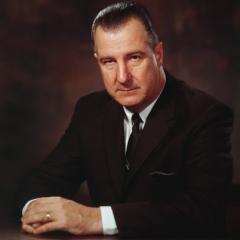
Spiro T. Agnew
Spiro T. Agnew was a former Vice President of the United States. He was born on November 9, 1918, and died on September 17, 1996. Agnew's political career was marked by his resignation due to corruption, making him the first Vice President in U.S. history to resign over a scandal. more
You May Also Like
“There are people in our society who should be separated and discarded.”
Source: The Impudent Snobs: Agnew Vs. the Intellectual Establishment
Source: Frankly speaking: a collection of extraordinary speeches
Source: The Impudent Snobs: Agnew Vs. the Intellectual Establishment
“You can't hit my team in the groin and expect me to smile about it.”
Source: The Different Drum: Community Making and Peace
Source: The Different Drum: Community Making and Peace
Source: The Different Drum: Community Making and Peace