Quotessence
Home / Quotes / Quote by Arthur Schopenhauer

Quote by Arthur Schopenhauer

“Immediate reality is conditional upon individual consciousness. Thus the individual real existence of man also lies first and foremost in his consciousness. But this is as such necessarily ideational, and thus conditioned by the intellect and by the sphere and substance of the intellect's activity. The degree of clarity of consciousness, and consequently of thought, can therefore be regarded as the degree of reality of existence. But this degree of thought, or of clear consciousness of ones own existence and that of others, varies very greatly within the human race itself according to the measure of natural intellectual power, the extent to which this is developed, and the amount of leisure available for reflection. - On Psychology”

Quote by Arthur Schopenhauer

Work

The Horrors and Absurdities of Religion

This book delves into the various aspects of religion, analyzing its horrors and absurdities as perceived by the author. more

Author
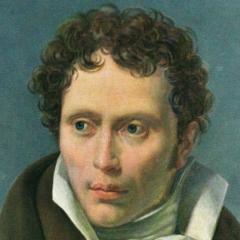
Arthur Schopenhauer
Arthur Schopenhauer

Arthur Schopenhauer was a prominent German philosopher born on February 22, 1788, and died on September 21, 1860. He is one of the most important figures in 19th-century German philosophy and is known for his unique pessimistic philosophical ideas. more

You May Also Like

“They [best dressed women] don’t want to look like their daughters. They want their own individual brand of chic. […] The cut and fit must be exactly right, and they are willing to spend hours in the fitting room to make sure of it. They spend money, too. But if any one of them went broke tomorrow she’d rather choose one perfectly cut expensive dress and make it do for years than buy a dozen cheap ones.”

“Mad world, mad kings, mad composition! John, to stop Arthur’s title in the whole, Hath willingly departed with a part; And France, whose armour conscience buckled on, Whom zeal and charity brought to the field As God’s own soldier, rounded in the ear With that same purpose-changer, that sly devil, That broker that still breaks the pate of faith, That daily break-vow, he that wins of all, Of kings, of beggars, old men, young men, maids,— Who having no external thing to lose But the word ‘maid’, cheats the poor maid of that— That smooth-faced gentleman, tickling commodity; Commodity, the bias of the world, The world who of itself is peisèd well, Made to run even upon even ground, Till this advantage, this vile-drawing bias, This sway of motion, this commodity, Makes it take head from all indifferency, 580 From all direction, purpose, course, intent; And this same bias, this commodity, This bawd, this broker, this all-changing word, Clapped on the outward eye of fickle France, Hath drawn him from his own determined aid, From a resolved and honourable war, To a most base and vile-concluded peace. And why rail I on this commodity? But for because he hath not wooed me yet— Not that I have the power to clutch my hand When his fair angels would salute my palm, But for my hand, as unattempted yet, Like a poor beggar raileth on the rich. Well, whiles I am a beggar I will rail, And say there is no sin but to be rich, And being rich, my virtue then shall be To say there is no vice but beggary. Since kings break faith upon commodity, Gain, be my lord, for I will worship thee.”

“It's not to say that everyone at the school was rich or overly sophisticated, because that wasn't the case. There were plenty of kids who came from neighborhoods just like mine, who struggled with far more than I ever would. But my first months at Whitney Young gave me a glimpse of something that had previously been invisible-- the apparatus of privilege and connection, what seemed like a network of half-hidden ladders and guide ropes that lay suspended over-head, ready to connect some but not all of us to the sky.”