Quotessence
Home / Quotes / Quote by Isabel Wilkerson

Quote by Isabel Wilkerson

“Our Negro problem, therefore, is not of the Negro's making. No group in our population is less responsible for its existence. But every group is responsible for its continuance.... Both races need to understand that their rights and duties are mutual and equal and their interests in the common good are idential.... There is no help or healing in apparaising past responsibilities or in present apportioning of praise or blame. The past is of value only as it aids in understanding the present; and an understanding of the facts of the problem--a magnanimous understanding by both races--is the first step toward its solution.”

Quote by Isabel Wilkerson

Work

Author

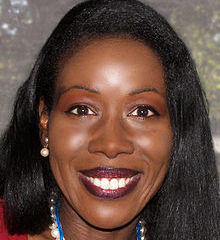
Isabel Wilkerson
Isabel Wilkerson

Isabel Wilkerson is an American journalist renowned for her profound insights into racial and social issues. Born in New York in 1961, she graduated from Columbia University with a Master's degree in journalism. Wilkerson's work, 'The Warmth of Other Suns', which meticulously documents the mass migration of African Americans from the Southern United States in the mid-20th century, won the Pulitzer Prize. more

You May Also Like

“We are fragmented into so many different aspects. We don´t know who we really are, or what aspects of ourselves we should identify with or believe in. So many contradictory voices, dictates, and feelings fight for control over our inner lives that we find ourselves scattered everywhere, in all directions, leaving nobody at home. Meditation, then, is bringing the mind home.”

“Sandra L. West and Aberjhani have compiled an encyclopedia that makes an important contribution to our need to know more about one of modern America’s truly significant artistic and cultural movements. It helps us to acknowledge the complexity of African American life at a time when the nation’s culture was taking on a recognizable shape, when race was becoming less of a crushing burden and more of a challenge to progressive people and their ideals, and when cities and their inhabitants symbolized the end of the past and the seductiveness of the new.”

“Many years later, people would forget about the quiet successes of everyday people like Ida Mae. In the debates to come over welfare and pathology, American would overlook people like her in its fixation with the underclass, just as a teacher can get distracted by the two or three problem children at the expense of the quiet, obedient ones. Few experts trained their sights on the unseen masses of migrants like her, who worked from the moment they arrived, didn’t end up on welfare, stayed married because that’s what God-fearing people of their generation did whether they were happy or not, and managed not to get strung out on drugs or whiskey or a cast of nameless, no-count men.”

“During the second half of the sixties, the center of the crisis shifted to the sprawling ghettos of the North. Here black experience was radically different from that in the South. The stability of institutional relationships was largely absent in Northern ghettos, especially among the poor. Over twenty years ago, the black sociologist E. Franklin Frazier was able to see the brutalizing effect of urbanization upon lower class blacks : ". . . The bonds of sympathy and community of interests that held their parents together in the rural environment have been unable to withstand the disintegrating forces in the city." Southern blacks migrated North in search of work, seeking to become transformed from a peasantry into a working class. But instead of jobs they found only misery, and far from becoming a proletariat, they came to constitute a lumpenproletariat, an underclass of rejected people. Frazier's prophetic words resound today with terrifying precision: ". . . As long as the bankrupt system of Southern agriculture exists, Negro families will continue to seek a living in the towns and cities of the country. They will crowd the slum areas of Southern cities or make their way to Northern cities, where their family life will become disrupted and their poverty will force them to depend upon charity." Out of such conditions, social protest was to emerge in a form peculiar to the ghetto, a form which could never have taken root in the South except in such large cities as Atlanta or Houston. The evils in the North are not easy to understand and fight against, or at least not as easy as Jim Crow, and this has given the protest from the ghetto a special edge of frustration. There are few specific injustices, such as a segregated lunch counter, that offer both a clear object of protest and a good chance of victory. Indeed, the problem in the North is not one of social injustice so much as the results of institutional pathology. Each of the various institutions touching the lives of urban blacks—those relating to education, health, employment, housing, and crime—is in need of drastic reform. One might say that the Northern race problem has in good part become simply the problem of the American city—which is gradually becoming a reservation for the unwanted, most of whom are black.”

“My parents both arrived in New York City after World War II, at different times but for the same reason the search for work. They left a country they loved, but where they could not make a living. About half a million Puerto Ricans made the same journey fleeing economic despair, the result of the US colonization of the island. Government officials blamed the people for the disastrous economic situation claiming that the problem was "overpopulation." They promoted the mass exodus of Puerto Ricans and implemented policies that sterilized thousands of poor and working women. The Young Lords are the sons and daughters of this Great Migration. As young people growing up in the United States, we witnessed how our parents were exploited, degraded, and humiliated. We felt their suffering, and we too had experiences with poverty and racism. All of this propelled us into action to fight for justice.”

“Where the Devil Loses His Lawn Ornament From marble to mudbrick, after stirrups & shock, Jenkins/Aëtius and his ragtag knights — with blue blades & purple quills — haul back to Rome and seed Europe with Lady Concordia’s grandeur, the Invincible Blaze.”