Quotessence
Home / Quotes / Quote by Charles Darwin

Quote by Charles Darwin

Work

The Descent of Man: The Concise Edition

This book is a shortened version of Charles Darwin's original work, which explores the theory of evolution and its implications for human development. It delves into the similarities and differences between humans and other species, offering insights into the evolutionary process. more

Author
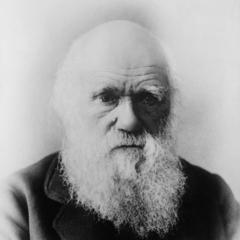
Charles Darwin
Charles Darwin

Charles Darwin, a British naturalist, is renowned as the founder of evolutionary biology. Born on February 12, 1809, in England, he passed away on April 19, 1882. Darwin is best known for his research on the theory of evolution, which proposed that species evolve through natural selection and survival of the fittest. more

You May Also Like

“I shall borrow two words used for a slightly different purpose by the great demographer Alfred Lotka to distinguish between the two systems of heredity enjoyed by man: endosomatic or internal heredity for the ordinary or genetical heredity we have in common with animals; and exosomatic or external heredity for the non-genetic heredity that is peculiarly our own - the heredity that is mediated through tradition, by which I mean the transfer of information through non-genetic channels from one generation to the next.”

“We have seen that in certain respects operant reinforcement resembles the natural selection of evolutionary theory. Just as genetic characteristics which arise as mutations are selected or discarded by their consequences, so novel forms of behavior are selected or discarded through reinforcement.”

“The evolution of cultures appears to follow the pattern of the evolution of species. The many different forms of culture which arise correspond to the "mutations" of genetic theory. Some forms prove to be effective under prevailing circumstances and others not, and the perpetuation of the culture is determined accordingly.”

“There is a striking parallel between the spreading of germs and the spreading of ideas or propaganda. On the one hand we are dealing with a virus which can be transported and transmitted under certain conditions which favor or limit its transportation or transmission: on the other hand with ideas, religions, and doctrines, which can be described as germs, benevolent or malevolent, according to the point of view one takes up. These germs can either remain at their source and be sterile, or emerge in the spreading of infection.”

“For memetics to be a reasonable research programme, it should be the case that copying, and differential success in causing the multiplication of copies, overwhelmingly plays the major role in shaping all or at least most of the contents of culture. Evolved domain-specific psychological dispositions, if there are any, should be at most a relatively minor factor that could be considered part of background conditions.”