“Dinners are defined as 'the ultimate act of communion;' men that can have communion in nothing else, can sympathetically eat together, can still rise into some glow of brotherhood over food and wine.”
Quote by Thomas Carlyle
Work
The French Revolution: a History: In Three Parts: I. the Bastille; II. the Constitution; III. the Guillotine : in Two Volumes
This two-volume work provides a detailed examination of the French Revolution, focusing on the key events and figures that shaped this pivotal period in history. The first part, 'the Bastille,' delves into the fall of the Bastille prison and its symbolic significance. The second part, 'the Constitution,' examines the drafting and implementation of the new constitution. The third part, 'the Guillotine,' explores the use of the guillotine as a means of execution and its role in the revolution. The book is known for its thorough research and scholarly approach to understanding the complex events of the French Revolution. more
Author
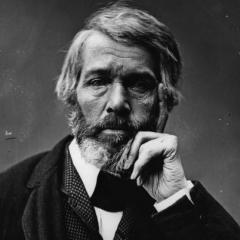
Thomas Carlyle
Thomas Carlyle, born on December 4, 1795, and died on February 5, 1881, was a prominent Scottish philosopher, historian, and writer. His works are known for their profound social criticism and unique literary style, which had a significant impact on 19th-century British literature and thought. more
You May Also Like
Source: Bird and Bough
Source: In the Catskills Selections from the Writings of John Burroughs
“[T]he cold warms me—after a different fashion from that of the kitchen stove.”
Source: In the Catskills Selections from the Writings of John Burroughs
Source: Winter Sunshine
“One is tempted to say that the most human plants, after all, are the weeds.”
Source: A year in the fields: selections from the writings of John Burroughs
Source: In the Catskills Selections from the Writings of John Burroughs
Source: John Burroughs' America: Selections from the Writings of the Naturalist
Source: In the Catskills Selections from the Writings of John Burroughs