Quotessence
Home / Quotes / Quote by Pankaj Mishra

Quote by Pankaj Mishra

“Incidentally, I am intrigued by how many European and Latin American writers expressed their political views in the columns they routinely wrote or write in the popular press, like Saramago, Vargas Llosa, and Eco. This strikes me as one way of avoiding opinionated fiction, and allowing your imagination a broader latitude. Similarly, fiction writers from places like India and Pakistan are commonly expected to provide primers to their country's histories and present-day conflicts. But we haven't had that tradition in Anglo-America.”

Quote by Pankaj Mishra

Author
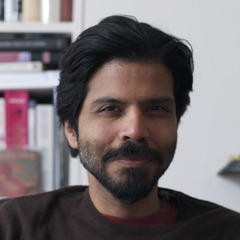
Pankaj Mishra
Pankaj Mishra

Pankaj Mishra is an Indian-born British essayist and historian, recognized for his insightful and critical essays on history, politics, and culture. Born in 1969, he has gained attention for his exploration of the complexities of modernity and its effects on the world. more

You May Also Like

“Once you get past the grand normative claims made in the West for literature, especially the novel, in the post-Christian era - that it is a secular substitute for religion, hallmark of modern civilization, a priori liberal and cosmopolitan, with authors appearing to implicitly embody such pious ideals - you encounter a less agreeable reality: parochialism, blinkered views, even racial prejudices of the kind the bourgeoisie have held everywhere.”

“What happens when we examine the claims made for Western liberalism as a universalizing ideology of tolerance, human dignity, equality, and compassion is the fact that the patron saint of modern liberalism, John Stuart Mill, thought that barbarian peoples like the Indians were unfit for self-rule.”

“No self-respecting feminist could argue with the claim that the novel is more likely to accept existing power structures than not. But there's a vast difference, surely, between Dickens saying Indians should be exterminated and a Dave Eggers writing eloquently about the NSA, but not being as outspoken on American military power abroad.”

“There are some serious limitations in Mo Yan's situation as a writer in China today - just as there are for Jia Zhangke, one of the world's greatest film directors. He can only phrase his dissent obliquely, in his art. Writers in "free" societies labor under no such constraints. They can write more or less whatever they want in both their fiction and their commentary. Yet so many of them look oddly inhibited, even timid, and depressingly a couple of prominent figures actually positioned themselves to the right of their governments, intelligence agencies, and corporations.”

“I guess I am nostalgic for a time - the nineteenth century and early twentieth - when writers were, to use Stefan Collini's phrase, "public moralists" and politicians, plutocrats, bankers, arms dealers, and experts and technocrats were not solely defining the moral norms as well as the political lives of our societies. We do have some writers claiming to be public moralists, but, as I said, they have actually been more jingoistic than even the henchmen of Bush and Blair.”