Quotessence
Home / Quotes / Quote by Karl Landsteiner

Quote by Karl Landsteiner

“The morphological characteristics of plant and animal species form the chief subject of the descriptive natural sciences and are the criteria for their classification. But not until recently has it been recognized that in living organisms, as in the realm of crystals, chemical differences parallel the variation in structure.”

Quote by Karl Landsteiner

Work

The Specificity of Serological Reactions

This book delves into the intricacies of serological reactions, exploring their fundamental concepts and their role in identifying and diagnosing various diseases. It covers the history, techniques, and methodologies used in serological testing, providing a detailed look at the science behind these reactions. more

Author
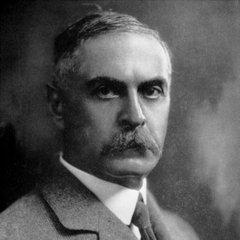
Karl Landsteiner
Karl Landsteiner

Karl Landsteiner, born on June 14, 1868 in Austria, passed away on June 26, 1943 in the United States. He was an Austrian-American physician and immunologist, renowned for his discovery of the ABO blood group system. Landsteiner's research had a profound impact on the development of blood transfusion medicine and immunology. more

You May Also Like

“We speak erroneously of "artificial" materials, "synthetics", and so forth. The basis for this erroneous terminology is the notion that Nature has made certain things which we call natural, and everything else is "man-made", ergo artificial. But what one learns in chemistry is that Nature wrote all the rules of structuring; man does not invent chemical structuring rules; he only discovers the rules. All the chemist can do is find out what Nature permits, and any substances that are thus developed or discovered are inherently natural. It is very important to remember that.”

“When carbon (C), Oxygen (o) and hydrogen (H) atoms bond in a certain way to form sugar, the resulting compound has a sweet taste. The sweetness resides neither in the C, nor in the O, nor in the H; it resides in the pattern that emerges from their interaction. It is an emergent property. Moreover, strictly speaking, is not a property of the chemical bonds. It is a sensory experience that arises when the sugar molecules interact with the chemistry of our taste buds, which in turns causes a set of neurons to fire in a certain way. The experience of sweetness emerges from that neural activity.”

“When chemists have brought their knowledge out of their special laboratories into the laboratory of the world, where chemical combinations are and have been through all time going on in such vast proportions,-when physicists study the laws of moisture, of clouds and storms, in past periods as well as in the present,-when, in short, geologists and zoologists are chemists and physicists, and vice versa,-then we shall learn more of the changes the world has undergone than is possible now that they are separately studied.”

“When one studies strongly radioactive substances special precautions must be taken if one wishes to be able to take delicate measurements. The various objects used in a chemical laboratory and those used in a chemical laboratory, and those which serve for experiments in physics, become radioactive in a short time and act upon photographic plates through black paper. Dust, the air of the room, and one's clothes all become radioactive.”

“Whenever Nature's bounty is in danger of exhaustion, the chemist has sought for a substitute. The conquest of disease has made great progress as a result of your efforts. Wherever we look, the work of the chemist has raised the level of our civilization and has increased the productive capacity of the nation. Waste materials, formerly cast aside, are now being utilized.”

“Who would not have been laughed at if he had said in 1800 that metals could be extracted from their ores by electricity or that portraits could be drawn by chemistry.”

“You have heard of the new chemical nomenclature endeavored to be introduced by Lavoisier, Fourcroy, &c. Other chemists of this country, of equal note, reject it, and prove in my opinion that it is premature, insufficient and false. These latter are joined by the British chemists; and upon the whole, I think the new nomenclature will be rejected, after doing more harm than good. There are some good publications in it, which must be translated into the ordinary chemical language before they will be useful.”