Quotessence
Home / Quotes / Quote by Konrad Lorenz

Quote by Konrad Lorenz

“I am convinced that of all the people on the two sides of the great curtain, the space pilots are the least likely to hate each other. Like the late Erich von Holst, I believe that the tremendous and otherwise not quite explicable public interest in space flight arises from the subconscious realization that it helps to preserve peace. May it continue to do so!”

Quote by Konrad Lorenz

Work

On aggression

This book delves into the psychological, sociological, and evolutionary aspects of aggression, examining its prevalence and impact on human behavior. more

Author

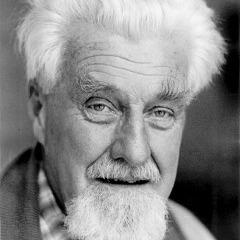
Konrad Lorenz
Konrad Lorenz

Konrad Lorenz was a renowned zoologist known for his contributions to the field of animal behavior. Born on November 7, 1903, and passing away on February 27, 1989, Lorenz's research focused on the social and instinctual behaviors of animals, as well as the influence of the environment on animal behavior. His work has had a profound impact on subsequent research in animal behavior. more

You May Also Like

“The fatalism of the limits-to-growth alternative is reasonable only if one ignores all the resources beyond our atmosphere, resources thousands of times greater than we could ever obtain from our beleaguered Earth. As expressed very beautifully in the language of House Concurrent Resolution 451, 'This tiny Earth is not humanity's prison, is not a closed and dwindling resource, but is in fact only part of a vast system rich in opportunities...'”

“This whole issue of limits to growth, which provides a psychological, as well as a physical, cap on potential expansion of activity and awareness, has had a very depressing effect on many people.... I don't for a moment think that there's any concept which anyone's working with now which will be followed as a straightforward scenario. But the idea embodied in concepts such as space colonization or space industrialization, or availability of nonterrestrial resources, is fundamental, and it will change the way in which people look at the future.”

“While civilization is more than a high material living standard, it is nevertheless based on material abundance. It does not thrive on abject poverty or in an atmosphere of resignation and hopelessness. Therefore the end objectives of solar system exploration are social objectives in the sense that they relate to, or are dictated by, present and future human needs.”

“Recent studies have considered the detection of a spaceship visiting our parish of the galaxy. In my opinion that last thought should bring a blush to every human cheek... Fecklessness might be the main theme of the aliens' report on the new-found source of radio pollution ... that emanates from beings who have mastered a lot of physics, chemistry and biology and yet let their children starve-while all around their planet the energy of their mother star runs to waste in a desert of space.”

“Now, more than ever, we need people in space... The events of September 11 show us how vulnerable we and our civilization are down here on Earth... So let us use our strength, our awareness of mortality as a civilization, to do something truly lasting and earth-shaking for humanity. Let us join with the peoples and cultures of this planet, the diversities of its perspectives and religions and science, so we can leave it-not behind, but as a springboard to something better.”

“A new space race has begun, and most Americans are not even aware of it. This race is not about political prestige or military power. This new race involves the whole human species in a contest against time. All of the people of the Earth are in a desperate race against disaster... To save the Earth we must look beyond it, to interplanetary space. To present the collapse of civilization and the end of the world as we know it, we must understand that our planet does not exist in isolation.”

“Our generation may stand at a crucial breakpoint in history, for we in the presently affluent nations may be the last who can afford to open up the high frontier. What we do during the next ten or twenty years may determine whether future generations will live in a humane and rewarding society, or whether they will spend their lives in desperate contention for the dwindling sustenance afforded by our limited terrestrial resources.”

“I firmly believe that we who are alive and can think today-in the closing years of the 20th century-have a commitment to our species to make sure that the flicker of movement we have thus managed in space stays sufficiently kindled so that the people of the 21st century can build upon and extend the human abode from Earth to the cosmos beyond.”

“We should be most careful about retreating from the specific challenge of our age. We should be reluctant to turn our back upon the frontier of this epoch... We cannot be indifferent to space, because the grand slow march of our intelligence has brought us, in our generation, to a point from which we can explore and understand and utilize it. To turn back now would be to deny our history, our capabilities.”