Quotessence
Home / Quotes / Quote by Eugene Fama

Quote by Eugene Fama

“The distribution of the market is fat-tailed relative to the normal distribution... For passive investors, none of this matters, beyond being aware that outlier returns are more common than would be expected if return distributions were normal.”

Quote by Eugene Fama

Author
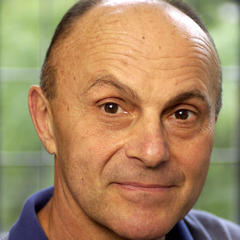
Eugene Fama
Eugene Fama

Eugene Fama, born on February 14, 1939, is an esteemed economist whose research has had a profound impact on the field of finance. He is best known for his work on the Efficient Market Hypothesis (EMH), which emphasizes the information efficiency of markets, and for developing the Capital Asset Pricing Model (CAPM) with Kenneth French and James MacKinlay. Fama's research has significantly influenced investment portfolio management and financial decision-making. more

You May Also Like

“Index funds have regularly produced rates of return exceeding those of active managers by close to 2 percentage points. Active management as a whole cannot achieve gross returns exceeding the market as a while and therefore they must, on average, underperform the indexes by the amount of these expense and transaction costs disadvantages.”

“Even fans of actively managed funds often concede that most other investors would be better off in index funds. But buoyed by abundant self-confidence, these folks aren't about to give up on actively managed funds themselves. A tad delusional? I think so. Picking the best-performing funds is 'like trying to predict the dice before you roll them down the craps table,' says an investment adviser in Boca Raton, FL. 'I can't do it. The public can't do it.'”

“Still, I figure we shouldn't' discourage fans of actively managed funds. With all their buying and selling, active investors ensure the market is reasonably efficient. That makes it possible for the rest of us to do the sensible thing, which is to index. Want to join me in this parasitic behavior? To build a well-diversified portfolio, you might stash 70 percent of your stock portfolio into a Wilshire 5000-index fund and the remaining 30 percent in an international-index fund.”