Quotessence
Home / Quotes / Quote by William Shakespeare

Quote by William Shakespeare

Work

William Shakespeare: The Complete Works

William Shakespeare: The Complete Works is a seminal compilation that brings together all the extant writings attributed to the renowned English playwright and poet. It encompasses his most famous plays such as Hamlet, Macbeth, and Romeo and Juliet, alongside his sonnets and longer poems. This collection is essential for students of literature and enthusiasts of Shakespeare's work, offering a comprehensive and authoritative resource for studying his contributions to English literature. more

Author
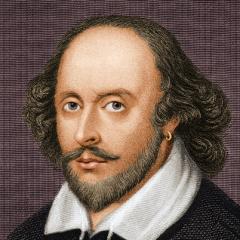
William Shakespeare
William Shakespeare

William Shakespeare (1564 - April 23, 1616) was one of the greatest poets of the English Renaissance, renowned for his dramatic works. His plays spanned a variety of genres, including tragedy, comedy, and history, and have had a profound impact on literature worldwide. more

You May Also Like

“There was a seminar for advanced students in Zürich that I was teaching and von Neumann was in the class. I came to a certain theorem, and I said it is not proved and it may be difficult. Von Neumann didn't say anything but after five minutes he raised his hand. When I called on him he went to the blackboard and proceeded to write down the proof. After that I was afraid of von Neumann.”

“...chimpanzees, bonobos, gorillas, and orangutans are thinking, self-aware beings, capable of planning ahead, who form lasting social bonds with others and have a rich social and emotional life. The great apes are therefore an ideal case for showing the arbitrariness of the species boundary. If we think that all human beings, irrespective of age or mental capacity, have some basic rights, how can we deny that the great apes, who surpass some humans in their capacities, also have these rights?”

“Habits of thought lead us to brush aside descriptions of cruelty to animals as emotional, for "animal-lovers only"; or if not that, then anyway the problem is so trivial in comparison to the problems of human beings that no sensible person could give it time and attention. This too is a prejudice - for how can one know that a problem is trivial until one has taken the time to examine its extent?”

“It would be nonsense to say that it was not in the interests of a stone to be kicked along the road...A stone has no interests because it cannot suffer. The capacity for suffering and enjoyment is, however, not only necessary, but also sufficient for us to say that a being has interests - at an absolute minimum, an interest in not suffering. A mouse, for example, does have an interest in not being kicked along the road because it will suffer if it is.”

“The statement "I am in pain" may be one piece of evidence for the conclusion that the speaker is in pain, but it is not the only possible evidence, and since people sometimes tell lies, not even the best possible evidence. Even if there were stronger grounds for refusing to attribute pain to those who do not have language, the consequences of this refusal might lead us to reject the conclusion. Human infants and young children are unable to use language. Are we to deny that a year-old child can suffer?”