Quotessence
Home / Quotes / Quote by Eric Benet

Quote by Eric Benet

“I am now in a place where I have to be truer to myself first before anyone else. If you're not real, how can you expect others to be real with you? The older you get; you aim to have an understanding of who you are as a person. But, I can honestly say, I am a better me than I've ever been in younger years.”

Quote by Eric Benet

Author
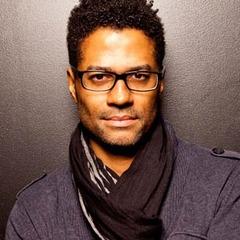
Eric Benet
Eric Benet

Eric Benet, born on October 15, 1966, is an American singer-songwriter. His musical career began in the early 1990s, and he became known for his emotive voice and unique musical style. Benet's music blends R&B, soul, and pop elements, making him one of the most popular artists of the 1990s and early 2000s. more

You May Also Like

“I have learned from my mistakes and accept that change is important. Not all change is bad. Therefore, you have to be more mindful and accountable about the decisions you make in life. Even though I've made mistakes, I can say my journey is full of authenticity because I didn't deny my ups and downs.”

“I think of moral beauty as what is the good and the just - terms perhaps best defined by their opposite: evil. Evil is the willingness to do damage to the other; its maximal expression is murder, but it includes a great deal of subtle and not-so-subtle injuries as it advances to that extreme. Evil acts reduce the other to an object, a being to its component parts, and obliterate subjectivity. Evil's breeding ground is a lack of empathy.”

“Ultimately, I don't know if love is an organizing principle we choose or if it's innate. I'm not sure the distinction matters to me much anymore; I just care about how we can reduce unnecessary suffering. I think that means learning to love in both the micro and the macro; engaging in ethical action at the level of intimacy and friendship, but also at the vocational level through our chosen work in the world, our right livelihood.”

“Anyone who lives with poor health or chronic pain, or who has endured poverty - real poverty - knows what it is to live with lack and a resulting fear so incessant that it becomes thoroughly normalized, invisible in its ubiquity. If you're lucky enough to have that fear begin to ease, it's an odd experience. A stranglehold eases off your entire body, one you never fully realized was there.”

“I often think there are three primary responses to suffering - rage, intoxication, or growth. We either want revenge for our pain, or we numb ourselves with the endless array of intoxicants available to us, from drugs to overwork, or we grow in empathy. Emptiness can transform into spaciousness; lack can become an agent of social action. But I think many of us struggle to remain on that third path without backsliding into the other two. I do.”

“I stared at the Ohio River every day as a child, a thing that for me is almost more symbol than river. The formation of personality is inextricable from place. It strikes me as an interesting example of dependent co-arising; land shapes the organism, which then reshapes - literally and figuratively - the land. This because of this; not that because not that. Nothing is separate, least of all the literary mind.”

“The idea that writing about characters of another race requires a passage through a critical gauntlet, which involves apology and self-examination of an almost punitive nature, as though the act of writing race was somehow morally suspect, is a dangerous one. This approach appears culturally sensitive, but often it reveals a failure of nerve. I believe the demand that we ought to reveals a species of fascism within the left - an embrace of political correctness with its required silences, which has left people afraid to offend or take a stand.”