Quotessence
Home / Quotes / Quote by Herman Melville

Quote by Herman Melville

“People think that if a man has undergone any hardship, he should have a reward; but for my part, if I have done the hardest possible day's work, and then come to sit down in a corner and eat my supper comfortably -why, then I don't think I deserve any reward for my hard day's work -for am I not now at peace? Is not my supper good?”

Quote by Herman Melville

Work

Moby-Dick: An authoritative text

This edition of 'Moby-Dick' is a comprehensive and respected version of Herman Melville's seminal work, offering readers a detailed and authentic portrayal of the 19th-century whaling industry. The novel delves into themes of obsession, fate, and the human condition through the narrative of Captain Ahab's quest for the white whale, Moby Dick. more

Author
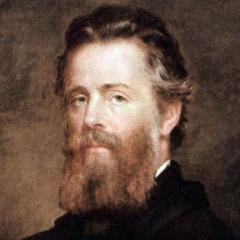
Herman Melville
Herman Melville

Herman Melville was a renowned 19th-century American novelist known for his profound psychological descriptions and unique literary style. His masterpiece, 'Moby-Dick', is considered a classic of American literature. more

You May Also Like

“That peace, safety, and concord may be the portion of our native land, and be long enjoyed by our fellow-citizens, is the most ardent wish of my heart, and if I can be instrumental in procuring or preserving them, I shall think I have not lived in vain.”

“There is simply no dignified way for a woman to live alone. Oh, she can get along financially perhaps (though not nearly as well as a man), but emotionally she is never left in peace. Her friends, her family, her fellow workers never let her forget that her husbandlessness, her childlessness - her selfishness, in short - is a reproach to the American way of life.”

“It is not our affluence, or our plumbing, or our clogged freeways that grip the imagination of others. Rather, it is the values upon which our system is built. These values imply our adherence not only to liberty and individual freedom, but also to international peace, law and order, and constructive social purpose. When we depart from these values, we do so at our peril.”

“Not often in the story of mankind does a man arrive on earth who is both steel and velvet, who is as hard as rock and soft as drifting fog, who holds in his heart and mind the paradox of terrible storm and peace unspeakable and perfect.”

“Civilisation will not last, freedom will not survive, peace will not be kept, unless a very large majority of mankind unite together to defend them and show themselves possessed of a constabulary power before which barbaric and atavistic forces will stand in awe.”

“We are becoming like cats, slyly parasitic, enjoying an indifferent domesticity. Nice and snug in the social, our historic passions have withdrawn into the glow of an artificial coziness, and our half-closed eyes now seek little other than the peaceful parade of television pictures.”

“That doctrine of peace at any price has done more mischief than any I can well recall that have been afloat in this country. It has occasioned more wars than any of the most ruthless conquerors. It has disturbed and nearly destroyed that political equilibrium so necessary to the liberties and the welfare of the world.”