“Think not those faithful who praise all thy words and actions, but those who kindly reprove thy faults.”
Quote by Socrates
Work
Wit and Wisdom of Socrates, Plato, Aristotle: Being a Treasury of Thousands of Glorious, Inspiring and Imperishable Thoughts, Views and Observations of the Three Great Greek Philosophers, Classified Under about Four Hundred Subjects for Comparative Study
This book is a curated compilation of the notable ideas and teachings of Socrates, Plato, and Aristotle. It includes a vast array of their philosophical musings, categorized into around four hundred distinct subjects. The aim is to facilitate a comparative study of the intellectual contributions of these three influential Greek philosophers, offering readers a deeper understanding of their work and its relevance across various disciplines. more
Author
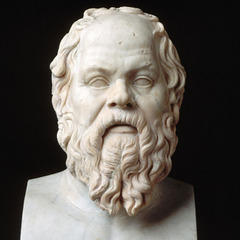
Socrates
Socrates, a renowned Greek philosopher, lived from 471 BC to 399 BC. He is known for his unique teaching method, the Socratic method, which emphasizes self-discovery through questioning. Socrates' philosophical ideas have had a profound impact on subsequent philosophy, and he is considered one of the founders of Western philosophy. more
You May Also Like
Source: Jane Grigson's Vegetable Book
“There are far more talented people doing voice work than I.”
Source: Peaceful Revolution: How We can Create the Future Needed for Humanity's Survival
Source: The Myths of Innovation
Source: Leadership is an Art