Quotessence
Home / Quotes / Quote by Mary McLeod Bethune

Quote by Mary McLeod Bethune

“I have had more than half a century of such happiness. A great deal of worry and sorrow, too, but never a worry or a sorrow that was not offset by a purple iris, a lark, a bluebird, or a dewy morning glory.”

Quote by Mary McLeod Bethune

Author
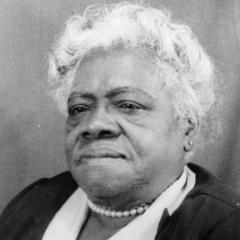
Mary McLeod Bethune
Mary McLeod Bethune

Mary McLeod Bethune was an outstanding educator, born on July 10, 1875, and died on May 18, 1955. She dedicated herself to improving the educational conditions of African Americans and achieved significant accomplishments in the field of education. more

You May Also Like

“God, we thank you for this earth, our homes; for the wide sky and the blessed sun, for the salt sea and the running water, for the everlasting hills and the never resting winds, for trees and the common grass underfoot. We thank you for our senses by which we hear the songs of birds, and see the splendor of the summer fields, and taste of the autumn fruits, and rejoice in the feel of the snow, and smell the breath of the spring. Grant us a heart wide open to all this beauty; and save our souls from being so blind that we pass unseeing when even the common thorn bush is aflame with your glory.”

“When we enter the landscape to learn something, we are obligated, I think, to pay attention rather than constantly to pose questions. To approach the land as we would a person, by opening an intelligent conversation. And to stay in one place, to make of that one, long observation a fully dilated experience. We will always be rewarded if we give the land credit for more than we imagine, and if we imagine it as being more complex even than language. In these ways we begin, I think, to find a home, to sense how to fit a place.”

“If you will cling to Nature, to the simple in Nature, to the little things that hardly anyone sees, and that can so unexpectedly become big and beyond measuring; if you have this love of inconsiderable things and seek quite simply, as one who serves, to win the confidence of what seems poor: then everything will become easier, more coherent and somehow more conciliatory for you, not in your intellect, perhaps, which lags marveling behind, but in your inmost consciousness, waking and cognizance.”

“This above all-ask yourself in the stillest hour of your night: must I write? Delve into yourself for a deep answer. And if this should be affirmative, if you may meet this earnest question with a strong and simple "I must," then build your life according to this necessity; your life even into its most indifferent and slightest hour must be a sign of this urge and a testimony to it. Then draw near to Nature. Then try, like some first human being, to say what you see and experience and love and lose.”

“If only we know, boss, what the stones and rain and flowers say. Maybe they call-call us-and we don't hear them. When will people's ears open, boss? When shall we have our eyes open to see? When shall we open our arms to embrace everything-stones, rain, flowers, and people? What do you think about that, boss? And what do your books have to say about that?”

“The beauty of the trees, the softness of the air, the fragrance of the grass, they speak to me. The summit of the mountain, the thunder of the sky, the rhythm of the sea, speaks to me. The faintness of the stars, the freshness of the morning, the dewdrop on the flower, speaks to me. The strength of the fire, the taste of the salmon, the trail of the sun, and the life that never goes away, they speak to me. And my heart soars.”