Quotessence
Home / Quotes / Quote by Marcus Aurelius

Quote by Marcus Aurelius

Work

沉思錄:讀了一百年還要再讀一百年的不朽鉅著

This book is a collection of personal reflections and philosophical musings, offering readers a deep exploration of human nature, ethics, and the pursuit of wisdom. It is celebrated for its clarity, depth, and enduring relevance, making it a staple in the literature of self-improvement and philosophy. more

Author
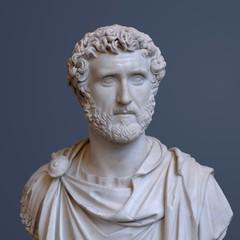
Marcus Aurelius
Marcus Aurelius

Marcus Aurelius, born in 121 AD and died in 180 AD, was an emperor of the Roman Empire. He is one of the Five Good Emperors and is known for his philosophical thoughts and the stability of his reign. He was not only an outstanding politician but also a famous Stoic philosopher, whose work 'Meditations' has had a profound impact on later generations. more

You May Also Like

“When someone steals another's clothes, we call them a thief. Should we not give the same name to one who could clothe the naked and does not? The bread in your cupboard belongs to the hungry; the coat unused in your closet belongs to the one who needs it; the shoes rotting in your closet belong to the one who has no shoes; the money which you hoard up belongs to the poor.”

“When any relationship is characterized by difference, particularly a disparity in power, there remains a tendency to model it on the parent-child-relationship. Even protectiveness and benevolence toward the poor, toward minorities, and especially toward women have involved equating them with children.”

“We used to have a War Office, but now we have a Ministry of Defence, nuclear bombs are now described as deterrents, innocent civilians killed in war are now described as collateral damage and military incompetence leading to US bombers killing British soldiers is cosily described as friendly fire. Those who are in favour of peace are described as mavericks and troublemakers, whereas the real militants are those who want the war.”

“Sometime in your life, hope that you might see one starved man, the look on his face when the bread finally arrives. Hope that you might have baked it or bought or even kneaded it yourself. For that look on his face, for your meeting his eyes across a piece of bread, you might be willing to lose a lot, or suffer a lot, or die a little, even.”