Quotessence
Home / Quotes / Quote by Oscar Wilde

Quote by Oscar Wilde

“Women are wonderfully practical,' murmured Lord Henry, 'much more practical than we are. In situations of that kind we often forget to say anything about marriage, and they always remind us.”

Quote by Oscar Wilde

Work

The Picture Of Dorian Gray

The story follows the protagonist Dorian Gray, whose portrait ages while he remains youthful, leading to a dark exploration of the consequences of unchecked desires. more

Author
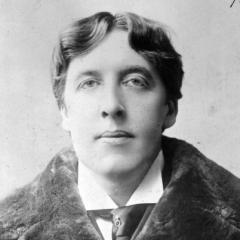
Oscar Wilde
Oscar Wilde

Oscar Wilde, born on October 16, 1854, in Ireland, and died on November 30, 1900, was a renowned Irish writer, playwright, and poet. His works are known for their wit, satire, and unique style, with notable works including 'The Picture of Dorian Gray' and 'Lady Windermere's Fan'. more

You May Also Like

“On Cary Grant and Rosalind Russell in His Girl Friday: "These two simply appreciate one another more than either of them appreciates anyone else, and they would rather be appreciated by one another more than by anyone else. They just are at home with one another, whether or not they can ever live together under the same roof -- that is, ever find a roof they can live together under.”

“The forsaking of all others is a keeping of faith, not just with the chosen one, but with the ones forsaken. The marriage vow unites not just a woman and a man with each other; it unites each of them with the community in a vow of sexual responsibility toward all others. The whole community is married, realizes its essential unity, in each of its marriages... Marital fidelity, that is, involves the public or institutional as well as the private aspect of marriage. One is married to marriage as well as to one's spouse. But one is married also to something vital of one's own that does not exist before the marriage: one's given word. It now seems to me that the modern misunderstanding of marriage involves a gross misunderstanding and underestimation of the seriousness of giving one's word, and of the dangers of breaking it once it is given. Adultery and divorce now must be looked upon as instances of that disease of word-breaking, which our age justifies as "realistic" or "practical" or "necessary," but which is tattering the invariably single fabric of speech and trust. (pg.117, "The Body and the Earth")”

“[F]rom my years of understanding ... I happily chose this kind of life in which I yet live [i.e., unmarried], which I assure you for my own part hath hitherto best contented myself and I trust hath been most acceptable to God. From the which if either ambition of high estate offered to me in marriage by the pleasure and appointment of my prince ... or if the eschewing of the danger of my enemies or the avoiding of the peril of death ... could have drawn or dissuaded me from this kind of life, I had not now remained in this estate wherein you see me. But so constant have I always continued in this determination ... yet is it most true that at this day I stand free from any other meaning that either I have had in times past or have at this present.”