Quotessence
Home / Quotes / Quote by Konrad Lorenz

Quote by Konrad Lorenz

“I believe-and human psychologists, particularly psychoanalysts should test this-that present-day civilized man suffers from insufficient discharge of his aggressive drive. It is more than probable that the evil effects of the human aggressive drives, explained by Sigmund Freud as the results of a special death wish, simply derive from the fact that in prehistoric times intra-specific selection bred into man a measure of aggression drive for which in the social order today he finds no adequate outlet.”

Quote by Konrad Lorenz

Work

ON AGRESSION

This book delves into the complex nature of aggression, exploring its origins, motivations, and consequences. It investigates the role of genetics, environment, and social dynamics in shaping aggressive tendencies, and examines both individual and societal responses to aggression. The text includes discussions on evolutionary theories, psychological perspectives, and empirical research findings, providing a multifaceted understanding of this complex phenomenon. more

Author

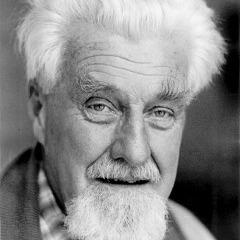
Konrad Lorenz
Konrad Lorenz

Konrad Lorenz was a renowned zoologist known for his contributions to the field of animal behavior. Born on November 7, 1903, and passing away on February 27, 1989, Lorenz's research focused on the social and instinctual behaviors of animals, as well as the influence of the environment on animal behavior. His work has had a profound impact on subsequent research in animal behavior. more

You May Also Like

“Justice begins with the recognition of the necessity of sharing. The oldest law is that which regulates it, and this is still themost important law today and, as such, has remained the basic concern of all movements which have at heart the community of human activities and of human existence in general.”

“Each religion is a brave guess at the authorship of Hamlet. Yet, as far as the play goes, does it make any difference whether Shakespeare or Bacon wrote it? Would it make any difference to the actors if their parts happened out of nothingness, if they found themselves acting on the stage because of some gross and unpardonable accident? Would it make any difference if the playwright gave them the lines or whether they composed them themselves, so long as the lines were properly spoken? Would it make any difference to the characters if 'A Midsummer Night's Dream' was really a dream?”