Quotessence
Home / Quotes / Quote by Aristotle

Quote by Aristotle

Work

The Ethics of Aristotle: The Nicomachean Ethics

This book is a translation and analysis of Aristotle's "Nicomachean Ethics", a foundational text in the field of ethics. It delves into Aristotle's concepts of virtue, happiness, and moral character, offering insights into his philosophical framework for understanding ethical behavior and human flourishing. more

Author
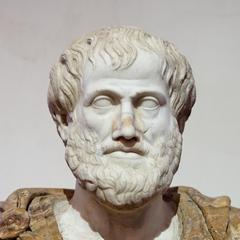
Aristotle
Aristotle

Aristotle, a renowned Greek philosopher, is one of the founders of Western philosophy. His thoughts covered a wide range of fields, including ethics, logic, politics, and had a profound impact on the world. more

You May Also Like

“A leader is best when people barely know that he exists.”

“But then back on lithium and rotating on the planet at the same pace as everyone else, you find your credit is decimated, your mortification complete: mania is not a luxury one can easily afford. It is devastating to have the illness and aggravating to have to pay for medications, blood tests, and psychotherapy. They, at least, are partially deductible. But money spent while manic doesn't fit into the Internal Revenue Service concept of medical expense or business loss. So after mania, when most depressed, you're given excellent reason to be even more so.”

“There comes a time when the blankness of the future is just so extreme, it's like such a black wall of nothingness. Not of bad things like a cave full of monsters and so, you're afraid of entering it. It's just nothingness, the void, emptiness and it is just horrible. It's like contemplating a future-less future and so you just want to step out of it. The monstrosity of being alive overwhelms you.”

“It was as if my father had given me, by way of temperament, an impossibly wild, dark, and unbroken horse. It was a horse without a name, and a horse with no experience of a bit between its teeth. My mother taught me to gentle it; gave me the discipline and love to break it; and- as Alexander had known so intuitively with Bucephalus- she understood, and taught me, that the beast was best handled by turning it toward the sun.”