“When "reality" is sought for at large, it is without intellectual import; at most the term carries the connotation of an agreeableemotional state.”
Quote by John Dewey
Work
The Essential Dewey: Pragmatism, education, democracy
The Essential Dewey: Pragmatism, education, democracy is a collection of key texts by John Dewey, a prominent philosopher and educational theorist. The book delves into Dewey's philosophical approach to pragmatism, emphasizing the importance of experience and practical application in understanding and improving the world. It also explores his ideas on education, advocating for a curriculum that integrates intellectual growth with social and practical skills. Furthermore, the book examines Dewey's contributions to democratic theory, highlighting the role of education in fostering informed and engaged citizens. The collection provides a comprehensive overview of Dewey's work and its enduring relevance in contemporary discussions on education, philosophy, and democracy. more
Author
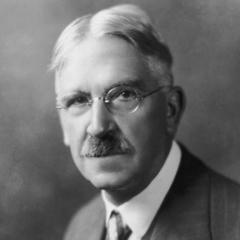
John Dewey
John Dewey was an American philosopher and educator, born on October 20, 1859, and died on June 1, 1952. He was a leading figure in the philosophy of pragmatism and had a profound impact on 20th-century education, philosophy, and the social sciences. more
You May Also Like
Source: Experience and Education, 60th Anniversary Edition
“I believe the Abominable Snowman may be real. I think there may be something in that.”
Source: Experience And Education
Source: The Later Works, 1925-1953: 1929-1930
Source: The Later Works of John Dewey, 1925 - 1953: 1931-1932, Essays, Reviews, and Miscellany
Source: The Later Works, 1925-1953: 1929-1930
Source: The Later Works, 1925-1953: 1929-1930
Source: The Later Works, 1925-1953: 1929-1930