“Just as a satisfaction of instinct spells happiness for us, so severe suffering is caused us if the external world lets us starve, if it refuses to sate our needs. One may therefore hope to be freed from a part of one's sufferings by influencing the instinctual impulses.”
Quote by Sigmund Freud
Work
Civilization and Its Discontents
Sigmund Freud's seminal work delves into the tension between civilization's demands and the individual's innate desires, examining the psychological conflicts that arise from the human need for both freedom and order. more
Author
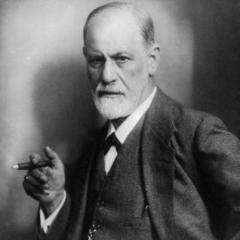
Sigmund Freud
Sigmund Freud, born on May 6, 1856, in Moravia, and died on September 23, 1939, in London, was an Austrian neurologist and the founder of psychoanalysis. Known as the father of modern psychology, Freud made significant contributions to the understanding of human psychology, introducing concepts such as the unconscious mind, dream analysis, and sexual theory. more
You May Also Like
Source: The standard edition of the complete psychological works of Sigmund Freud
Source: The standard edition of the complete psychological works of Sigmund Freud
Source: The standard edition of the complete psychological works of Sigmund Freud
Source: Major Works
Source: The standard edition of the complete psychological works of Sigmund Freud
Source: The standard edition of the complete psychological works of Sigmund Freud
Source: The standard edition of the complete psychological works of Sigmund Freud
Source: The standard edition of the complete psychological works of Sigmund Freud
Source: The standard edition of the complete psychological works of Sigmund Freud
Source: The standard edition of the complete psychological works of Sigmund Freud