Quotessence
Home / Quotes / Quote by Ethel Smyth

Quote by Ethel Smyth

“the writer must resist this temptation [to quote] and do his best with his own tools. It would be most convenient for us musicians if, arrived at a given emotional crisis in our work, we could simply stick in a few bars of Brahms or Schubert. Indeed many composers have no hesitation in so doing. But I have never heard the practice defended; possibly because that hideous symbol of petty larceny, the inverted comma, cannot well be worked into a musical score.”

Quote by Ethel Smyth

Work

Streaks of life

Streaks of life examines the transient yet impactful events and relationships that leave lasting marks on an individual's journey. The narrative weaves together vignettes that highlight the interplay between chance encounters and deliberate choices, suggesting that life's meaning often emerges from the accumulation of small, vivid impressions rather than grand designs. Through observational prose, the work invites readers to consider how personal histories are composed of both luminous highlights and subtle shadows. more

Author

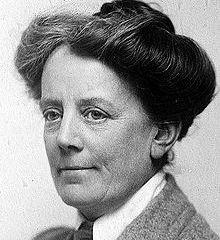
Ethel Smyth
Ethel Smyth

Ethel Smyth was a notable British composer and conductor, recognized for her substantial contributions to music. Born on April 23, 1858, and passing away on May 8, 1944, Smyth's compositions, encompassing orchestral pieces, chamber music, and songs, have had a profound impact on the musical landscape. more

You May Also Like

“No doubt other writers have often put a thing more brilliantly, more subtly than even a very cunning artist in words can hope to emulate, a supreme phrase being a bit of luck that only happens now and then. And inasmuch as the condiments and secret travail of human nature are always the same, and that certain psychological moments must ever and ever recur, what more tempting than to pin down such a moment with the blow of a borrowed hammer?”

“Of all the systems - if indeed a bundle of contradictions and absurdities may be called a system - which human nature in its moments of intoxication has produced, that which men have contrived with a view to forming the minds and regulating the conduct of women, is perhaps the most completely absurd.”