Quotessence
Home / Quotes / Quote by Suzanne Collins

Quote by Suzanne Collins

Work

The Hunger Games

In a world divided into twelve districts and a powerful Capitol, young Katniss Everdeen volunteers to take her younger sister's place in the annual Hunger Games. The games are a brutal competition where the last contestant standing wins, but survival is not guaranteed. As Katniss navigates the treacherous world of the Capitol and the harsh realities of the districts, she discovers the true nature of power and the courage it takes to fight for what is right. more
Author

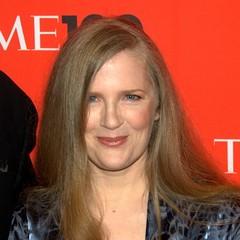
Suzanne Collins
Suzanne Collins

Suzanne Collins is an acclaimed American author, born on August 10, 1962. She is known for her unique literary style and profound thematic explorations, with her most famous work being the 'Hunger Games' series. more

You May Also Like

“I am often accused of interfering in the private lives of citizens. Yes, if I did not, had I not done that, we wouldn't be here today. And I say without the slightest remorse, that we wouldn't be here, we would not have made economic progress, if we had not intervened on very personal matters - who your neighbour is, how you live, the noise you make, how you spit, or what language you use. We decide what is right. Never mind what the people think.”

“Mine is a very matter-of-fact approach to the problem. If you can select a population and they're educated and they're properly brought up, then you don't have to use too much of the stick because they would already have been trained. It's like with dogs. You train it in a proper way from small. It will know that it's got to leave, go outside to pee and to defecate. No, we are not that kind of society. We had to train adult dogs who even today deliberately urinate in the lifts.”

“Keynes was a great economist. In every discipline, progress comes from people who make hypotheses, most of which turn out to be wrong, but all of which ultimately point to the right answer. Now Keynes, in 'The General Theory of Employment, Interest and Money,' set forth a hypothesis which was a beautiful one, and it really altered the shape of economics. But it turned out that it was a wrong hypothesis. That doesn't mean that he wasn't a great man!”

“Our minds tell us, and history confirms, that the great threat to freedom is the concentration of power. Government is necessary to preserve our freedom, it is an instrument through which we can exercise our freedom; yet by concentrating power in political hands, it is also a threat to freedom. Even though the men who wield this power initially be of good will and even though they be not corrupted by the power they exercise, the power will both attract and form men of a different stamp.”

“Political freedom means the absence of coercion of a man by his fellow men. The fundamental threat to freedom is power to coerce, be it in the hands of a monarch, a dictator, an oligarchy, or a momentary majority. The preservation of freedom requires the elimination of such concentration of power to the fullest possible extent and the dispersal and distribution of whatever power cannot be eliminated — a system of checks and balances.”