Quotessence
Home / Quotes / Quote by Ambrose Bierce

Quote by Ambrose Bierce

Author

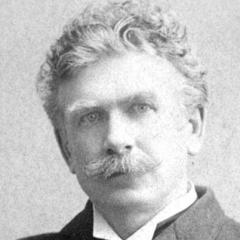
Ambrose Bierce
Ambrose Bierce

Ambrose Bierce was an American journalist, satirist, and editor, renowned for his sharp wit and dark humor. He is best known for his satirical novel 'The Devil's Dictionary' and his short stories. Bierce was born on June 24, 1842, and his exact date of death remains unknown, as he disappeared during the American Civil War. more

You May Also Like

“Censure is willingly indulged, because it always implies some superiority: men please themselves with imagining that they have made a deeper search, or wider survey than others, and detected faults and follies which escape vulgar observation.”

“It is not indeed certain, that the most refined caution will find a proper time for bringing a man to the knowledge of his own failing, or the most zealous benevolence reconcile him to that judgment by which they are detected; but he who endeavours only the happiness of him whom he reproves will always have either the satisfaction of obtaining or deserving kindness; if he succeeds, he benefits his friend; and if he fails, he has at least the consciousness that he suffers for only doing well.”

“If we consider the manner in which those who assume the office of directing the conduct of others execute their undertaking, it will not be very wonderful that their labours, however zealous or affectionate, are frequently useless. For what is the advice that is commonly given? A few general maxims, enforced with vehemence, and inculcated with importunity, but failing for want of particular reference and immediate application.”

“Advice, as it always gives a temporary appearance of superiority, can never be very grateful, even when it is most necessary or most judicious. But for the same reason everyone is eager to instruct his neighbours. To be wise or to be virtuous is to buy dignity and importance at a high price; but when nothing is necessary to elevation but detection of the follies or faults of others, no man is so insensible to the voice of fame as to linger on the ground.”

“Vanity is so frequently the apparent motive of advice that we, for the most part, summon our powers to oppose it without very accurate inquiry whether it is right. It is sufficient that another is growing great in his own eyes at our expense, and assumes authority over us without our permission; for many would contentedly suffer the consequences of their own mistakes, rather than the insolence of him who triumphs as their deliverer.”

“Advice is offensive, not because it lays us open to unexpected regret, or convicts us of any fault which had escaped our notice, but because it shows us that we are known to others as well as to ourselves; and the officious monitor is persecuted with hatred, not because his accusation is false, but because he assumes that superiority which we are not willing to grant him, and has dared to detect what we desired to conceal.”