Quotessence
Home / Quotes / Quote by Richard A. Falk

Quote by Richard A. Falk

“After the Second World War, facilitating the establishment of the UN and aiding the reconstruction of Europe, the United States was widely viewed, at least in the West, as a benevolent hegemon. In the non-West, the US was often perceived as a supporter of the colonial powers in their struggle to maintain control over their colonial possessions, and was viewed far more critically, especially by emerging elites that were more inclined to socialist development paradigms than to the capitalist ethos favoured by Washington.”

Quote by Richard A. Falk

Author
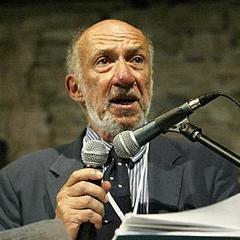
Richard A. Falk
Richard A. Falk

Richard A. Falk is a renowned international law scholar, born on November 13, 1930. He has extensive research and teaching experience in the fields of international law and international relations. more

You May Also Like

“More recently the US has more accurately been viewed as a militarist 'empire' that fights destructive wars and intervenes in a variety of societies, especially in the Middle East to retain control over oil reserves, and lends crucial support to Israel that not only oppresses the Palestinian people but threatens to convert the entire region into a war zone.”

“At present, the United States, with over 700 foreign military bases, navies in every ocean, a programme to militarise space, and drone bases planned for all regions of the world, is increasingly perceived in relation to its hard power diplomacy, a threat to political independence and stability for many countries.”

“Historically, international law lent a measure of legality to the colonial system, and allowed the West to set the rules for participation as a sovereign state on a global level. It also protected the interests of foreign investment in countries of the global South even when these were exploitative, and deprived countries of the benefits of resources situated within their territories.”

“The idea of self-determination was gradually given credibility by international law, and it lent strong emancipatory support to movements of liberation struggling against a West-centric world order. Latin American countries used international law creatively, both to limit the protection of foreign investment by establishing the primacy of national sovereignty in relation to natural resources, and by building support for the norm on non-intervention in internal affairs.”

“Human rights and international criminal law both illustrate the contradictory potential of international law. On one level, the imposition of human rights norms is a restraint on interventionary diplomacy, especially if coupled with respect for the legal norm of self-determination. But on another level, the protection of human rights creates a pretext for intervention as given approval by the UN Security Council in the form of the R2P (responsibility to protect) norm, as used in the 2011 Libyan intervention. The same applies with international criminal accountability.”

“In the Goldstone Report, Israeli perpetrators of possible crimes against humanity were made subject to prosecution and punishment, although the geopolitical leverage of the United States within the UN prevents implementation. At the same time, several African leaders are being prosecuted for their crimes against humanity and participation in genocide: a double standard of sorts, given the impunity accorded to the West and Israel.”

“There was a deliberate decision after the failure of the League of Nations to make the next attempt to establish a global political actor sensitive to geopolitical realities. The underlying idea was to provide major states, defined in 1945 by reference to the winners in the Second World War (now an anachronism), with assurance that they could take part in the UN without jeopardising their national interests. In this regard, the UN has succeeded, as none of the big countries has withdrawn, and the Organisation has managed to achieve virtually universal membership of all sovereign states.”