Quotessence
Home / Quotes / Quote by Ambrose Bierce

Quote by Ambrose Bierce

“Magpie, n.: A bird whose theivish disposition suggested to someone that it might be taught to talk.”

Quote by Ambrose Bierce

Author
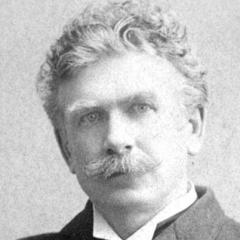
Ambrose Bierce
Ambrose Bierce

Ambrose Bierce was an American journalist, satirist, and editor, renowned for his sharp wit and dark humor. He is best known for his satirical novel 'The Devil's Dictionary' and his short stories. Bierce was born on June 24, 1842, and his exact date of death remains unknown, as he disappeared during the American Civil War. more

You May Also Like

“HOG, n. A bird remarkable for the catholicity of its appetite and serving to illustrate that of ours. Among the Mahometans and Jews, the hog is not in favor as an article of diet, but is respected for the delicacy and the melody of its voice. It is chiefly as a songster that the fowl is esteemed; the cage of him in full chorus has been known to draw tears from two persons at once. The scientific name of this dicky-bird is _Porcus Rockefelleri_. Mr. Rockefeller did not discover the hog, but it is considered his by right of resemblance.”

“PRIMATE, n. The head of a church, especially a State church supported by involuntary contributions. The Primate of England is the Archbishop of Canterbury, an amiable old gentleman, who occupies Lambeth Palace when living and Westminster Abbey when dead. He is commonly dead.”

“ZANY, n. A popular character in old Italian plays, who imitated with ludicrous incompetence the _buffone_, or clown, and was therefore the ape of an ape; for the clown himself imitated the serious characters of the play. The zany was progenitor to the specialist in humor, as we to-day have the unhappiness to know him. In the zany we see an example of creation; in the humorist, of transmission. Another excellent specimen of the modern zany is the curate, who apes the rector, who apes the bishop, who apes the archbishop, who apes the devil.”

“TECHNICALITY, n. In an English court a man named Home was tried for slander in having accused his neighbor of murder. His exact words were: "Sir Thomas Holt hath taken a cleaver and stricken his cook upon the head, so that one side of the head fell upon one shoulder and the other side upon the other shoulder." The defendant was acquitted by instruction of the court, the learned judges holding that the words did not charge murder, for they did not affirm the death of the cook, that being only an inference.”

“LAOCOON, n. A famous piece of antique scripture representing a priest of that name and his two sons in the folds of two enormous serpents. The skill and diligence with which the old man and lads support the serpents and keep them up to their work have been justly regarded as one of the noblest artistic illustrations of the mastery of human intelligence over brute inertia.”