“HOG, n. A bird remarkable for the catholicity of its appetite and serving to illustrate that of ours. Among the Mahometans and Jews, the hog is not in favor as an article of diet, but is respected for the delicacy and the melody of its voice. It is chiefly as a songster that the fowl is esteemed; the cage of him in full chorus has been known to draw tears from two persons at once. The scientific name of this dicky-bird is _Porcus Rockefelleri_. Mr. Rockefeller did not discover the hog, but it is considered his by right of resemblance.”
Quote by Ambrose Bierce
Work
Delphi Complete Works of Ambrose Bierce (Illustrated)
The Delphi Complete Works of Ambrose Bierce (Illustrated) is a comprehensive compilation of the author's writings, featuring his most famous works such as 'The Cask of Amontillado' and 'An Occurrence at Owl Creek Bridge.' The illustrated format enhances the reader's experience with visual elements that complement Bierce's distinctive narrative voice. more
Author
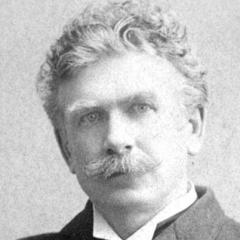
Ambrose Bierce
Ambrose Bierce was an American journalist, satirist, and editor, renowned for his sharp wit and dark humor. He is best known for his satirical novel 'The Devil's Dictionary' and his short stories. Bierce was born on June 24, 1842, and his exact date of death remains unknown, as he disappeared during the American Civil War. more
You May Also Like
Source: The Devil's Dictionary: The Devil World
Source: The Devil's Dictionary: The Devil World
Source: Delphi Complete Works of Ambrose Bierce (Illustrated)
“Self-denial is indulgence of a propensity to forego.”
Source: Delphi Complete Works of Ambrose Bierce (Illustrated)
Source: The Devil's Dictionary: Easyread Large Bold Edition
“ULTIMATUM, n. In diplomacy, a last demand before resorting to concessions.”
Source: The Devil's Dictionary: The Devil World
Source: The Devil's Dictionary: The Devil World
“When you are ill make haste to forgive your enemies, for you may recover.”
Source: The Unabridged Devil's Dictionary