Quotessence
Home / Quotes / Quote by Benjamin Barber

Quote by Benjamin Barber

Work

Jihad vs. McWorld: Terrorism's Challenge to Democracy

This book delves into the complex interplay between religious terrorism and the influence of Western consumerism, analyzing their impact on modern democracy and global politics. more

Author
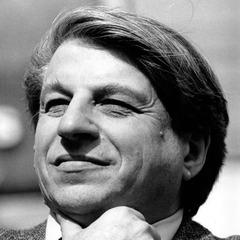
Benjamin Barber
Benjamin Barber

Benjamin Barber, an American political scientist and author, was born on August 2, 1939, and passed away on April 24, 2017. He is renowned for his profound insights into global political, social, and cultural issues, particularly in the areas of urban politics and globalization. Barber's work often delves into themes of power, democracy, and civil society. more

You May Also Like

“If we were built, what were we built for? ... Why do we have this amazing collection of sinews, senses, and sensibilities? Were we really designed in order to recline on the couch, extending our wrists perpendicular to the floor so we can flick through the television's offerings? Were we really designed in order to shop some more so the economy can grow some more? Or were we designed to experience the great epiphanies that come from contact with each other and with the natural world?”

“In the name of economy a thousand wasteful devices would be invented; and in the name of efficiency new forms of mechanical time-wasting would be devised: both processes gained speed through the nineteenth century and have come close to the limit of extravagant futility in our own time. But labor-saving devices could only achieve their end-that of freeing mankind for higher functions-if the standard of living remained stable. The dogma of increasing wants nullified every real economy and set the community in a collective squirrel-cage.”

“In this state of total consumerism-which is to say a state of helpless dependence on things and services and ideas and motives that we have forgotten how to provide ourselves-all meaningful contact between ourselves and the earth is broken. We do not understand the earth in terms either of what it offers us or of what it requires of us, and I think it is the rule that people inevitably destroy what they do not understand.”

“Man today is fascinated by the possibility of buying, more, better, and especially, new things. He is consumption hungry... To buy the latest gadget, the latest model of anything that is on the market, is the dream of everybody, in comparison to which the real pleasure in use is quite secondary. Modern man, if the dared to be articulate about his concept of heaven, would describe a vision which would look like the biggest department store in the world.”

“The effect of the post-Enlightenment project for human society is that all human activity is absorbed into labor. It becomes an unending cycle of production for the sake of consumption. The modern concept of "built-in obsolescence" makes this clear. The cycle of production and consumption has to be kept going, and the work of the artist or craftsman who aims to create something enduring becomes marginal to the economic order.”

“To the extent that we consume, in our present circumstances, we are guilty. To the extent that we guilty consumers are conservationists, we are absurd. But what can we do? Must we go on writing letters to politicians and donating to conservation organizations until the majority of our fellow citizens agree with us? Or can we do something directly to solve our share of the problem? I am a conservationist. I believe wholeheartedly in putting pressure on the politicians and in maintaining the conservation organizations.”

“Too much of the world's happiness depends on taking from one to satisfy another. To increase my standard of living, someone in another part of the world must lower his. The worldwide crisis of hunger that we face today is a result of that method of pursuing happiness. Industrialized nations acquire appetites for more and more luxuries and higher and higher standards of living, and increasing numbers of people are made poor and hungry. It doesn't have to be that way.”

“We used to say I don't care if I never have any money As long as I have my sweet honey and a shack in the woodland Now we say I don't care if I don't have money, but it's not true We can't live without money, no, because we don't want to We want one of those and two of those, and oh that one looks neat, wrap it up Put it on my MasterCard. Put it on my Visa And I sing it now, hey hey, hey hey, who woulda thunk it Hey hey, hey hey, who woulda thunk it.”