Quotessence
Home / Quotes / Quote by Barry Commoner

Quote by Barry Commoner

“What the new fertilizer technology has accomplished for the farmer is clear: more crop can be produced on less acreage than before. Since the cost of fertilizer, relative to the resultant gain in crop sales, is lower than that of any other economic input, and since the Land Bank pays the farmer for acreage not in crops, the new technology pays him well. The cost-in environmental degradation-is borne by his neighbors in town who find their water polluted. The new technology is an economic success-but only because it is an ecological failure.”

Quote by Barry Commoner

Author
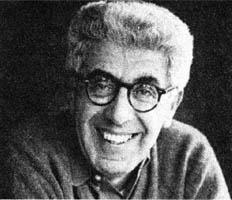
Barry Commoner
Barry Commoner

Barry Commoner was an esteemed biologist, born on May 28, 1917, and passed away on September 30, 2012. He made significant contributions to environmental science, particularly in the fields of soil pollution and environmental protection. more

You May Also Like

“When we mistake what we can know for all there is to know, a healthy appreciation of one's ignorance in the face of a mystery like soil fertility gives way to the hubris that we can treat nature as a machine. Once that leap has been made, one input follows another, so that when the synthetic nitrogen fed to plants makes them more attractive to insects and vulnerable to disease, as we have discovered, the farmer turns to chemical pesticides to fix his broken machine.”

“Humility is the situation of the earth. It's there silent and accepting everything and in a miraculous way making out of all the refuse new richness...transforming corruption itself into a power of life and a new possibility of creativeness, open to the sunshine, open to the rain, ready to receive any seed we sow and capable of bringing thirtyfold, sixtyfold, a hundredfold out of every seed.”

“If in the human economy, a squash in the field is worth more than a bushel of soil, that does not mean that food is more valuable than soil; it means simply that we do not know how to value the soil. In its complexity and its potential longevity, the soil exceeds our comprehension; we do not know how to place a just market value on it, and we will never learn how. Its value is inestimable; we must value it, beyond whatever price we put on it, by respecting it.”

“Only within the 20th Century has biological thought been focused on ecology, or the relation of the living creature to its environment. Awareness of ecological relationships is - or should be - the basis of modern conservation programs, for it is useless to attempt to preserve a living species unless the kind of land or water it requires is also preserved. So delicately interwoven are the relationships that when we disturb one thread of the community fabric we alter it all - perhaps almost imperceptibly, perhaps so drastically that destruction follows.”

“Our children are our signature to the roster of history; our land is merely the place our money was made. There is as yet no social stigma in the possession of a gullied farm, a wrecked forest, or a polluted stream, provided the dividends suffice to send the youngsters to college. Whatever ails the land, the government will fix it.”