Quotessence
Home / Quotes / Quote by Kevin Canty

Quote by Kevin Canty

“The only thing I can say that is not bullshit is that you do have to learn to write in a way that you would learn to play the violin. Everybody seems to think that you should be able to turn on the faucet one day and out will come the novel. I think for most people it's just practice, practice, practice, that sense of just learning your instrument until - when you have an idea on the violin, you don't have to translate it into violin-speak anymore - the language is your own. It's not something you can think your way into, or outsmart. you've just got to do it.”

Quote by Kevin Canty

Author
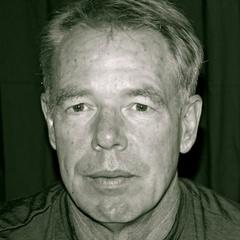
Kevin Canty
Kevin Canty

Kevin Canty, born on January 17, 1953, is a renowned author of novels. His works are known for their profound emotions and rich imagination, which have won him a dedicated following. more

You May Also Like

“An author, like any other so-called artist, is a man in whom the normal vanity of all men is so vastly exaggerated that he finds it a sheer impossibility to hold it in. His over-powering impulse is to gyrate before his fellow men, flapping his wings and emitting defiant yells. This being forbidden by the police of all civilized nations, he takes it out by putting his yells on paper. Such is the thing called self-expression.”

“This fact was something I also learned from this first novel that I needed personal experience to invent, to fantasize, to create fiction, but at the same time I needed some distance, some perspective on this experience in order to feel free enough to manipulate it and to transform it into fiction. If the experience is very close, I feel inhibited. I have never been able to write fiction about something that has happened to me recently. If the closeness of the real reality, of living reality, is to have a persuasive effect on my imagination, I need a distance, a distance in time and in space.”

“With no other privilege than that of sympathy and sincere good wishes, I would address an affectionate exhortation to the youthful literati, grounded on my own experience. It will be but short; for the beginning, middle, and end converge to one charge: NEVER PURSUE LITERATURE AS A TRADE.”

“Let me tell you about my day. I get up at 8 o'clock in the morning. At 8:30 am, I leave the house and I arrive at my office at 8:37. I stay in the office until 2 o'clock in the afternoon. I get in my Porsche and I'm home at 2:03 because the one-way streets make it faster for me to drive. And between 8:36 am and 2 pm, I'm doing one of three things: I'm writing. I'm staring out the window. Or I'm writhing on the floor.”

“Death of the Father would deprive literature of many of its pleasures. If there is no longer a Father, why tell stories? Doesn't every narrative lead back to Oedipus? Isn't storytelling always a way of searching for one's origin, speaking one's conflicts with the Law, entering into the dialectic of tenderness and hatred?”