“The good of the governed is the end, and rewards and punishments are the means, of all government. The government of the supreme and all-perfect Mind, over all his intellectual creation, is by proportioning rewards to piety and virtue, and punishments to disobedience and vice. ... The joys of heaven are prepared, and the horrors of hell in a future state, to render the moral government of the universe perfect and complete. Human government is more or less perfect, as it approaches nearer or diverges further from an imitation of this perfect plan of divine and moral government.”
Quote by John Adams
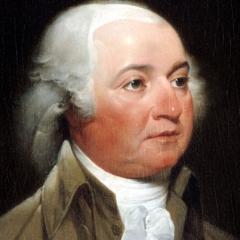
John AdamsJohn Adams, the second President of the United States, was a statesman, diplomat, and writer. Born on October 30, 1735, and died on July 4, 1826, Adams played a significant role in the American Revolutionary War. He was one of the drafters of the Declaration of Independence and served as the President from 1789 to 1797. more
“The dons, the bashaws, the grandees, the patricians, the sachems, the nabobs, call them by what names you please, sigh and groan and fret, and sometimes stamp and foam and curse, but all in vain. The decree is gone forth, and it cannot be recalled, that a more equal liberty than has prevailed in other parts of the earth must be established in America.”
Source: The Works of John Adams, Second President of the United States: With a Life of the Author, Notes and Illustrations
“National defense is one of the cardinal duties of a statesman, and that there is an obligation to perform such a duty absolutely irrespective of party politics or factional differences.”
“Nip the shoots of arbitrary power in the bud, is the only maxim which can ever preserve the liberties of any people. When the people give way, their deceivers, betrayers and destroyers press upon them so fast that there is no resisting afterwards. The nature of the encroachments is to, grow every day more encroaching; like a cancer, it eats faster and faster every hour.”
Source: The Works of John Adams, Second President of the United States: With a Life of the Author, Notes and Illustrations
“We should be unfaithful to ourselves if we should ever lose sight of the danger to our Liberties if anything partial or extraneous should infect the purity of our free, fair, virtuous, and independent elections. If an election is to be determined by a majority of a single vote, and that can be procured by a party through artifice or corruption, the Government may be the choice of a party for its own ends, not of the nation for the national good.”
“If the blessings of our political and social condition have not been too highly estimated, we cannot well overrate the responsibility and duty which they impose upon us. We hold these institutions of government, religion, and learning, to be transmitted, as well as enjoyed. We are in the line of conveyance, through which whatever has been obtained by the spirit and efforts of our ancestors is to be communicated to our children.”
Source: The Life, Eulogy, and Great Orations of Daniel Webster
“We are bound to maintain public liberty, and, by the example of our own systems, to convince the world that order and law, religion and morality, the rights of conscience, the rights of persons, and the rights of property, may all be preserved and secured, in the most perfect manner, by a government entirely and purely elective. If we fail in this, our disaster will be significant, and will furnish an argument, stronger than has yet been found, in support of those opinions which maintain that government can rest safely on nothing but power and coercion.”
Source: A Discourse, Delivered at Plymouth, December 22, 1820: In Commemoration of the First Settlement of New-England
“Without wishing to damp the ardor of curiosity or influence the freedom of inquiry, I will hazard a prediction that, after the most industrious and impartial researchers, the longest liver of you all will find no principles, institutions or systems of education more fit in general to be transmitted to your posterity than those you have received from your ancestors.”
“The happiness of man, as well as his dignity, consists in virtue.”
Source: Letters, Addressed to His Wife
“What havoc, said I to myself, would these manners make in America! Our governors, our judges, our senators or representatives, and even our ministers, would be appointed by harlots, for money; and their judgments, decrees, and decisions, be sold to repay themselves, or, perhaps, to procure the smiles of profligate females.”
Source: The Works of John Adams, Second President of the United States: Autobiography (cont.) Diary. Notes of a debate in the Senate of the United States. Essays: On private revenge. On self-delusion. On private revenge. Dissertation on the canon and the feudal law. Instructions of the town of Braintree to their representative, 1765. The Earl of Clarendon to William Pym. Governor Winthrop to Governor Bradford. Instructions of the town of Boston to their representatives, 1768. Instructions of the town of
“If we cherish the virtues and the principles of our fathers, Heaven will assist us to carry on the work of human liberty and human happiness. Auspicious omens cheer us. Great examples are before us. Our own firmament now shines brightly upon our path.”
Source: The Great Orations and Senatorial Speech of Daniel Webster